
Analysis of Pump Motor: Technical Characteristics and Power Calculation Guide
Release Time:
2024-09-05
In summary, the technical characteristics and power calculation method of the water pump motor are key to ensuring the normal operation and high efficiency of the water pump system. In practical applications, it is also necessary to consider parameters such as the type, voltage, and current of the motor, as well as factors such as the material and structure of the water pump, to ensure that the selected motor and water pump can match and operate stably.
Pump motor
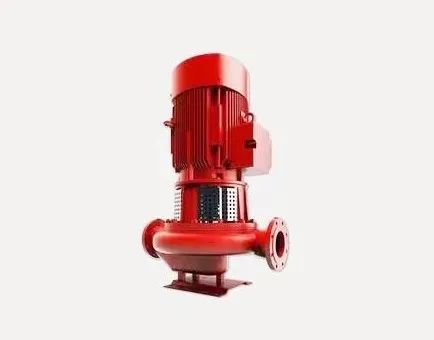
The water pump motor is an indispensable power equipment in industry, agriculture, and even households. As the core component of the water pump system, its technical characteristics and power calculation methods are crucial to ensure the normal operation and high efficiency of the water pump system. The following is a detailed analysis of the technical characteristics and power calculation methods of water pump motors:
Technical characteristics of water pump motor
The working characteristics of water pump motors are relatively small starting torque, relatively low starting frequency, and relatively long continuous operation time. Therefore, most water pump motors are squirrel cage rotor asynchronous motors or synchronous motors. The size of the motor capacity of the water pump unit is selected based on the performance curve of the water pump, and the water pump should operate within the range of the motor nameplate current (working current).
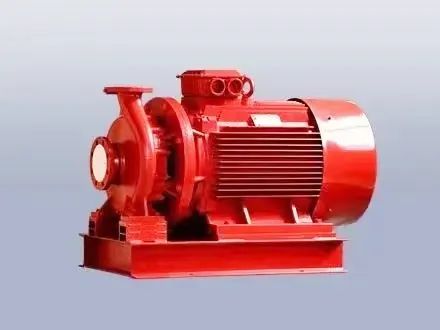
Troubleshooting of water pump motor
The center height of the horizontal pump shaft is not equal to that of the motor shaft, and the deposition of scale in the vertical pump body or the sinking of the shaft can cause overcurrent operation of the motor. Troubleshooting can be carried out from the following aspects. The suction of impurities such as sediment and rust particles inside the pump increases the resistance of the medium, making it possible to remove impurities from the pump by disassembling the load. At the same time, attention should be paid to cleaning the inlet filter. If the pump has been running for a long time or due to poor assembly, the gap between the impeller and the pump casing may be too small, causing friction during operation; Or if the packing is pressed too tightly and there is no water entering the packing box; Furthermore, the gap between the pump coupling and the motor coupling is too small, causing the two shafts to collide during operation, which increases the consumption of shaft power.
Firstly, it is possible to disassemble and inspect the fitting dimensions of each component for repair; Secondly, the packing cap should be loosened and the cleaning water seal pipe should be checked; Thirdly, adjust the gap between the couplings, which is usually considered to be around Smm. The discharge flow of the water pump is too large, and the motor is operating at overload. The valve opening can be reduced to decrease the flow rate.
Power calculation of water pump motor
The formula for calculating the power of the water pump motor is as follows, and explanations of the meanings contained in each part of the formula are attached.
N=KP=KPe/η=KρgQH/1000η (KW)
The meanings of each symbol in the formula are as follows:
P: The shaft power (KW) of the pump, also known as input power, refers to the power transmitted by the electric motor to the pump shaft;
Pe: Effective power of the pump (KW). Also known as output power, it refers to the effective energy obtained by the output medium from the pump per unit time;
ρ: The density of the medium transported by the pump (Kg/m3). The density of general water is 1000Kg/m3 (specific gravity of 1), and the density of acid is 1250Kg/m3 (specific gravity of 1.25);
Q: Pump flow rate (m3/S). When the flow unit is m3/h, attention should be paid to converting it to m3/S;
H: Pump head (m);
g: The gravitational acceleration (m/s2) is 9.8 m/s2;
K: The safety factor of the electric motor is generally taken as 1.1-1.3;
η: The efficiency of the pump. The attached table provides the efficiency values of the four main operating points of the UHB series pump (some of which may overlap). Based on the data from these four points, the flow efficiency curve can be estimated. When calculating, the efficiency is roughly taken from the curve according to the flow rate
Example: A user requires a 50UHB-ZK-25-35 pump with Q=25m3/h, H=35m, medium density ρ=1250Kg/m3, and speed n=2900r/min. Please select an electric motor.
Solution: According to the data provided in the attached table, take the efficiency of 50UHB-ZK-25-35 pump at 25m3/h as 52%, and substitute each data into the formula:
N=KρgQH/1000η=1.2×1250×9.8×25×35/(1000×0.52×3600)=6.9KW
matters needing attention
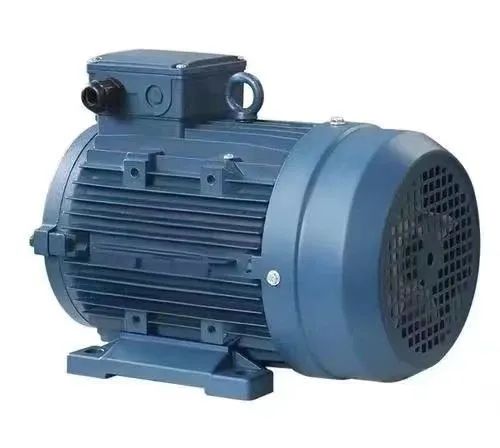
When calculating the power of the water pump motor, it should be ensured that the parameters used (such as flow rate, head, efficiency, etc.) are accurate and reliable.
Consider the safety factor and efficiency of the electric motor to ensure that the selected motor can meet the actual operating requirements and has a certain safety margin.
Select appropriate calculation methods based on specific operating conditions and requirements to obtain more accurate power calculation results.
In summary, the technical characteristics and power calculation method of the water pump motor are key to ensuring the normal operation and high efficiency of the water pump system. In practical applications, it is also necessary to consider parameters such as the type, voltage, and current of the motor, as well as factors such as the material and structure of the water pump, to ensure that the selected motor and water pump can match and operate stably.
Related News