
How to reduce the operating noise of the gearbox
Release Time:
2025-08-01
The noise of a reducer is usually caused by gear friction, gear collision, or vibration. The noise of the reducer is related to its own structure. Among them, the design method of gears is closely related to the machining accuracy of gears. Specifically, planetary gears and sun gears play a crucial role in gear operation.
How to reduce the operating noise of the gearbox
The noise of a reducer is usually caused by gear friction, gear collision, or vibration. The noise of the reducer is related to its own structure. Among them, the design method of gears is closely related to the machining accuracy of gears. Specifically, planetary gears and sun gears play a crucial role in gear operation.
During the operation of the gear, the inner ring gear meshes, but continuous impact causes the gear to produce meshing frequency, resulting in forced vibration "1" under forced conditions. Among them, the meshing frequency of the gears, FZ = NZ/60, From this formula, we know that the degree of gear engagement increases and noise decreases at high speeds.
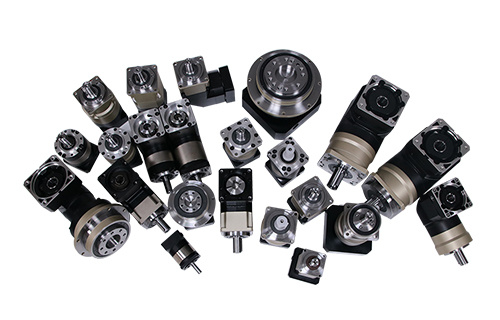
Secondly, the machining accuracy and surface roughness of gears are also the main causes of noise generation. In gear machining, it is necessary to start from these two aspects and strengthen the machining accuracy of gears. Between gears, gears will vibrate and noise will come from the gears. The machining accuracy is the decisive factor determining the noise level.
The main function of a gear reducer is to transmit speed and torque, therefore, gear machining accuracy requires gear stability. Gears with higher stability extend their service life on one hand. During the transmission process, impact and vibration are effectively reduced, and noise is also reduced.
According to the principle of gear operation in reducers, it is possible to effectively combine planetary structures to achieve statistical and analytical analysis of various types of reducers. Obviously, the noise of the reducer is mainly caused by the meshing of the gears. If we optimize the gear parameters. It can achieve the goal of reducing the noise of the gearbox.
1. Accuracy affects the accuracy of JJHT, and the grade determines the performance of the gear. The noise generated during the meshing process is also determined by this. When designing a gear reducer, the designer considers cost-effectiveness and determines a more economical and practical gear, selecting the machining accuracy level. This ignores the impact of gear machining accuracy on noise levels. Through experimental research, gears with high machining accuracy produce much less noise than gears with low machining accuracy. Therefore, when conditions permit, choosing high-precision gear machining can reduce gear noise.
2. Structural influence: When designing reducer gears, as the width of the gears increases, the unit load of each gear decreases while the torque remains constant. At this point, gear overlap increases, resulting in reduced gear deformation and improved gear transmission. The noise has decreased. German mechanical design expert Opaz stated that under certain conditions, when the torque remains constant, the noise generated by a large tooth width is smaller than that generated by a small tooth width. The small pitch of gears can ensure multi gear contact.
Related News