
Precautions for choosing a planetary gearbox
Release Time:
2025-08-01
The selection of planetary gearboxes is a systematic engineering process, and any negligence in parameters can lead to equipment failure or poor performance. It is recommended to communicate more with the supplier's technical team after determining the key parameters, as their experience can help you avoid many pitfalls in practical applications.
Precautions for choosing a planetary gearbox
The selection of planetary gearboxes is a systematic engineering process, and any negligence in parameters can lead to equipment failure or poor performance. It is recommended to communicate more with the supplier's technical team after determining the key parameters, as their experience can help you avoid many pitfalls in practical applications.
When choosing a planetary gearbox, multiple factors need to be considered comprehensively to ensure that its performance, lifespan, reliability, and cost-effectiveness meet the specific application requirements. Here are some key precautions:
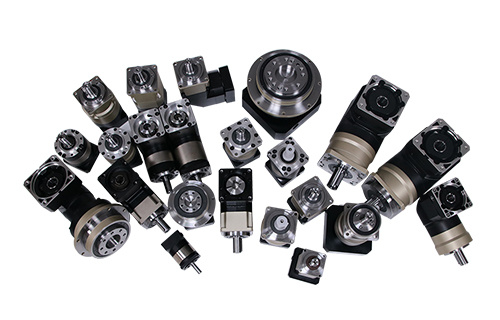
Core performance parameters
Reduction ratio:
Determine requirements: Calculate the required reduction ratio (i=input speed/output speed) based on the output speed requirements and input (motor) speed.
Optional range: Understand the standard reduction ratio range provided by the selected brand/series. Non standard customization usually has higher costs and longer cycles.
Accuracy matching: Ensure that the reduction ratio can meet the accuracy requirements of the final output position or speed.
Torque:
Rated output torque: This is the torque value that the gearbox can continuously output under rated operating conditions. It must be greater than or equal to the large sustained working torque required by the application.
Peak torque: The large torque that the gearbox can withstand in a short period of time (such as starting, braking, and overload moments). It must be greater than or equal to the large instantaneous impact torque that may occur in the application.
Safety factor: It is strongly recommended to multiply the required torque by a safety factor (usually 1.2-2.0 or higher, depending on the smoothness, impact level, and importance of the operating conditions) to select the rated torque of the gearbox. Applications with high impact loads require a greater safety factor.
Calculation: Consider load inertia, acceleration/deceleration, friction, external forces (gravity, cutting force, etc.), and efficiency to calculate the actual required torque.
Accuracy (backlash):
Definition: Refers to the angle (usually measured in arc minutes) at which the output shaft can rotate slightly when the input shaft is fixed. The smaller the backlash, the higher the positioning accuracy and rigidity, but the cost is usually also higher.
Application matching:
High precision positioning (CNC, robot joints, precision turntables): requires small backlash (such as ≤ 3 arcmin, even ≤ 1 arcmin).
Ordinary speed regulation, position control without strict requirements: moderate backlash (such as 5-15 arcmin) may be sufficient.
For applications with low precision requirements: larger backlash is acceptable.
Long term effects: The backlash will increase with wear and tear during use.
Match input source (usually motor)
Interface size:
Input shaft/hole: Ensure that the size, tolerance, and keyway (if any) of the gearbox input interface (shaft or hole) match the motor output shaft.
Installation of flanges: Ensure that the flange size, hole spacing, hole diameter, and thread specifications for the connection between the reducer and the motor are completely consistent (common ones include IEC standard flanges, NEMA standard flanges, etc.). This is one of the common installation errors.
Input speed:
Rated input speed: The selected gearbox must have a rated input speed greater than or equal to the high operating speed of the motor in this application.
Overspeed capability: Understand the instantaneous high input speed allowed by the gearbox (such as the possible backlash speed of the motor during emergency stop).
Power:
Although torque is a more direct selection criterion, it is also necessary to ensure that the rated input power of the reducer meets the requirements (usually determined by the rated output torque and reduction ratio). In high-speed applications, power capacity may become a limiting factor.
Lifespan, reliability, and cost
Expected lifespan:
Evaluate the calculated lifespan of the gearbox (usually referred to as bearing lifespan L10) based on the load spectrum (working torque, speed, duty cycle) and environmental conditions. Compare with the expected lifespan requirements of the application.
High reliability applications require longer design lifetimes or higher safety factors.
Efficiency:
Planetary gearboxes typically have high efficiency (single-stage>95%, two-stage>92%, three-stage>90%). Efficiency affects energy consumption and heat generation, and is important for long-term operation or high-power applications.
Brand and Quality:
Choose a brand with good reputation, stable quality, and technical support. Well known brands usually have more reliable performance parameters, but also higher prices.
Consider factors such as manufacturing accuracy, materials, heat treatment processes, and assembly quality.
Cost:
Compare the total cost of ownership (purchase cost, installation cost, maintenance cost, energy consumption cost, downtime loss cost due to failure) of different options while meeting all performance, lifespan, and reliability requirements.
Supply cycle and after-sales service:
The supply time of standard and customized products.
The supplier's technical support capability, spare parts supply capability, and warranty policy.
Related News