
Selection and calculation of servo motors, detailed steps and examples to teach you how to choose servo motors step by step
Release Time:
2024-10-25
A servo motor is a micro motor used as an actuator in automatic control devices, whose function is to convert electrical signals into angular displacement or angular velocity of the shaft. Servo motors, also known as executive motors, are used as actuators in automatic control systems to convert received electrical signals into angular displacement or angular velocity outputs on the motor shaft.
A servo motor is a micro motor used as an actuator in automatic control devices, whose function is to convert electrical signals into angular displacement or angular velocity of the shaft. Servo motors, also known as executive motors, are used as actuators in automatic control systems to convert received electrical signals into angular displacement or angular velocity outputs on the motor shaft.
Detailed calculation steps for servo motor selection
1、 Capacity selection calculation
Types of mechanical systems
There are generally several types of mechanical systems driven by variable speed motors.
When using servo systems in mechanical systems, please pay attention to the following points.
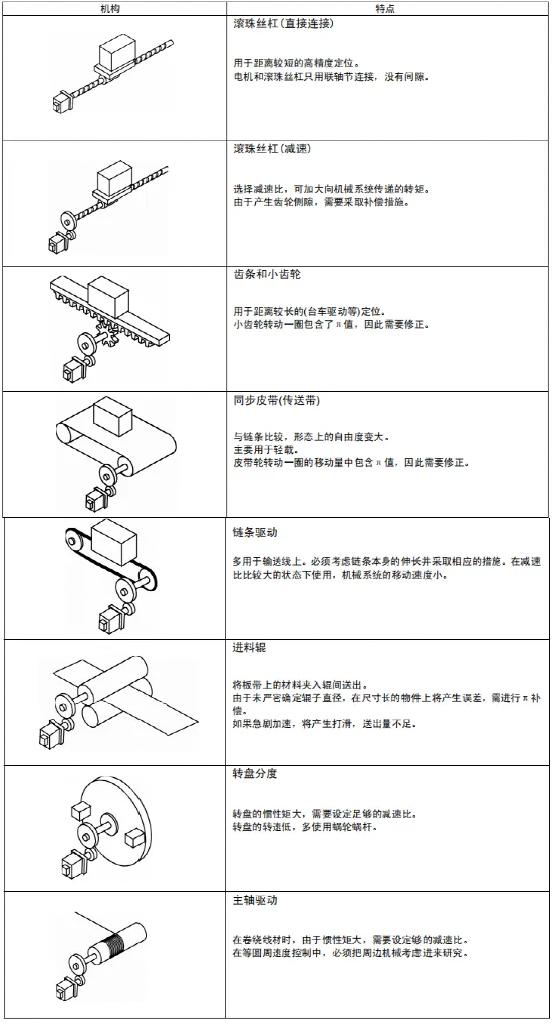
① Reduction ratio
In order to effectively utilize the power of the servo motor, it should be used within a range close to the rated speed (maximum rotational speed) of the motor. At the highest rotational speed, the continuous output torque is still smaller than the rated torque.
② Preloading torque
Applying pre pressure to the screw enhances rigidity and increases the load torque value. Please refer to the ball screw specification for the friction torque generated by preloading.
③ Maintain torque
When the lifting machinery stops, the same service motor continues to output holding force.
In situations where there is ample time, it is recommended to use the hold brake.
Related News