
servo motor
Release Time:
2024-10-23
There are too many application fields for servo motors. As long as there is a power source and precision requirements, servo motors are generally involved. Equipment with relatively high requirements for process accuracy, processing efficiency, and work reliability, such as machine tools, printing equipment, packaging equipment, textile equipment, laser processing equipment, robots, and automated production lines.
A servo motor refers to an engine that controls the operation of mechanical components in a servo system, and is an indirect transmission device that supplements the motor.
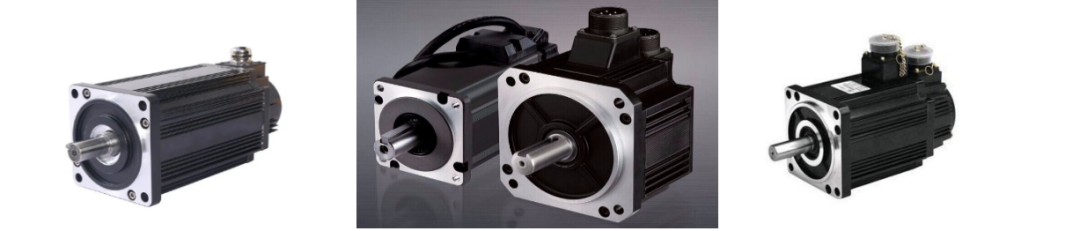
Servo motors can accurately control speed and position accuracy, and can convert voltage signals into torque and speed to drive control objects. Compared with single machine asynchronous motors, servo motors have three significant characteristics: large starting torque, wide operating range, and no self rotation phenomenon.
Chinese name: servo motor
Foreign name: Servo motor
Type of equipment
Automatic control system for usage scenarios
Explain the subsidy motor indirect transmission device
A servo motor refers to an engine that controls the operation of mechanical components in a servo system, and is an indirect variable speed device that supplements the motor. Servo motors can control speed and position accuracy very accurately, and can convert voltage signals into torque and speed to drive control objects. The rotor speed of a servo motor is controlled by input signals and can react quickly. In automatic control systems, it is used as an actuator and has characteristics such as small electromechanical time constant, high linearity, and starting voltage. It can convert the received electrical signal into angular displacement or angular velocity output on the motor shaft.
Definition: An engine that controls the operation of mechanical components in a servo system. It is an auxiliary motor indirect transmission device.
Function: Servo motor, can control speed and position accuracy very accurately. Convert voltage signals into torque and speed to drive control objects
Classification: DC servo motor and AC servo motor.
advantage
Firstly, let's take a look at the advantages of servo motors compared to other motors such as stepper motors
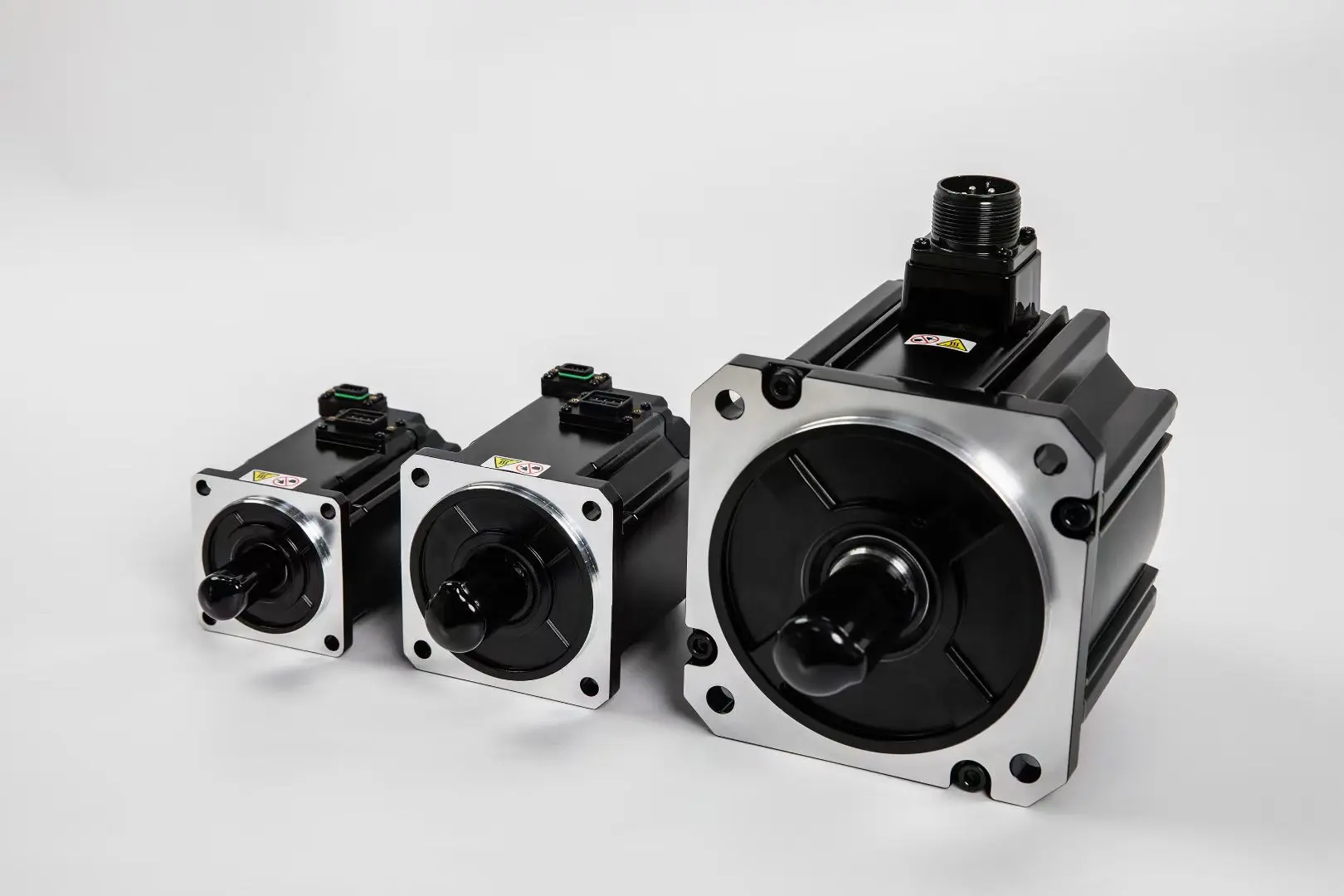
servo motor
1. Accuracy: Closed loop control of position, speed, and torque has been achieved; Overcoming the problem of stepping motor out of step;
2. Speed: Good high-speed performance, generally rated speed can reach 2000-3000 revolutions per minute;
3. Adaptability: Strong overload resistance, able to withstand loads up to three times the rated torque, especially suitable for situations with instantaneous load fluctuations and fast starting requirements;
4. Stability: Running smoothly at low speeds, there will be no stepping phenomenon similar to that of a stepper motor during low-speed operation. Suitable for occasions with high-speed response requirements;
5. Timeliness: The dynamic response time of motor acceleration and deceleration is short, usually within a few tens of milliseconds;
6. Comfort: significantly reduced heat and noise. Simply put, it means that the ordinary motor we usually see will continue to rotate for a while due to its own inertia after power failure, and then stop. And servo motors and stepper motors stop at will and leave at will, with extremely fast response times. But there is a phenomenon of stepping out of step in the stepper motor.
There are too many application fields for servo motors. As long as there is a power source and precision requirements, servo motors are generally involved. Equipment with relatively high requirements for process accuracy, processing efficiency, and work reliability, such as machine tools, printing equipment, packaging equipment, textile equipment, laser processing equipment, robots, and automated production lines.
Related News