
The difference between gearbox and gearbox
Release Time:
2024-10-17
In summary, although both gear reducers and gear reducers use the principle of gear transmission for speed transformation, their main purpose is to reduce speed and increase torque, while the other is to increase speed and decrease torque, serving different mechanical equipment and process requirements.
There are significant differences in the working principle and purpose between gearbox and gearbox. Here are the differences between them:
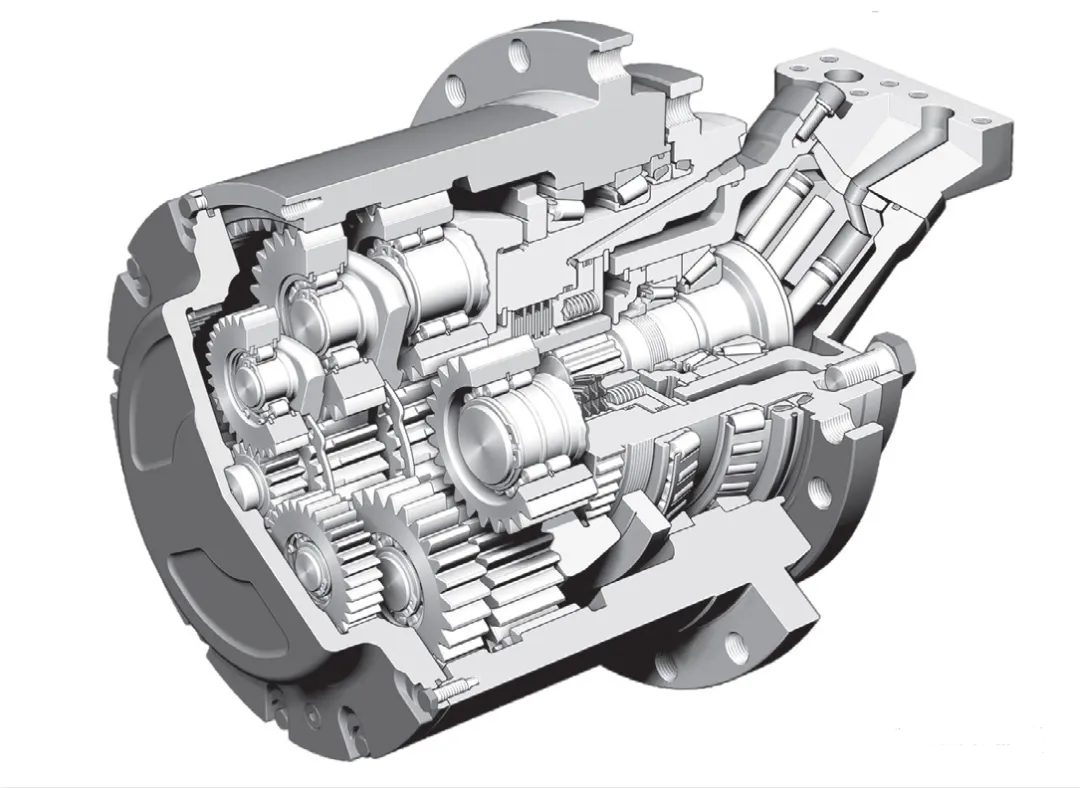
1. Working principle:
-* * Gearbox * * (reducer): By a series of meshing gear sets, the high-speed rotational kinetic energy on the input shaft is converted into low-speed rotational kinetic energy on the output shaft. At the same time, due to the inverse relationship between torque and speed, deceleration increases the output torque.
-Gearbox for speed increasing: Unlike a gearbox, it converts low-speed rotational kinetic energy on the input shaft into high-speed rotational kinetic energy on the output shaft, but typically reduces output torque during the speed increase process.
2. Output speed:
-* * Gear reducer * * reduces output speed and increases torque.
-The gearbox increases output speed and reduces torque.
3. Purpose:
**Gear reducers are widely used in applications that require high torque and low speed, such as crane lifting mechanisms, elevator traction machines, wind turbines, robot joint drives, automotive transmission systems, etc.
-Gearboxes are commonly used in situations where the power of low-speed motors needs to be accelerated to higher speeds, such as auxiliary drive systems in certain industrial equipment, spindle drives in some precision machine tools, or situations where speed needs to be increased during power transmission.
4. Structural design: The gear combination and arrangement of the gearbox and gearbox are different. Speed reducers usually use a combination of helical gears, planetary gears, etc. to achieve the effect of increasing speed, while gearboxes use a combination of worm gears, parallel shaft gears, etc. to achieve the effect of reducing speed.
It should be noted that gearbox and gearbox are not mutually exclusive concepts, and they can be combined and used according to different needs in different applications. For example, a complete transmission system may include multiple cascaded gearboxes, some for speed increase and some for deceleration, to achieve the desired speed and torque output.
There are some differences between gearbox and gearbox, which mainly involve reduction ratio, rotation direction, and application scenarios.
1. Reduction ratio: The function of a gear reducer is to convert high-speed input into low-speed output. The reduction ratio is usually greater than 1 to reduce speed and increase torque. The function of a gearbox is to convert low-speed input into high-speed output, with a reduction ratio usually less than 1, in order to increase speed and reduce torque.
2. Rotation direction: The rotation direction of the gearbox and gearbox is opposite. The gearbox converts the rotation direction of the input shaft to the opposite direction of the output shaft. The gearbox converts the rotation direction of the input shaft to the same direction as the output shaft.
3. Application scenarios: Gearboxes are commonly used in applications that require converting high-speed inputs into low-speed outputs, such as industrial machinery, automotive transmission systems, and robots. Gearboxes are suitable for situations where low-speed inputs need to be converted into high-speed outputs, such as certain machine tools, wind turbines, and mixers.
It should be noted that gearboxes and gearboxes have some structural similarities, both including input shafts, output shafts, and gear combinations. Their difference lies in their design parameters and working principles to meet different transmission requirements and application scenarios.
In summary, although both gear reducers and gear reducers use the principle of gear transmission for speed transformation, their main purpose is to reduce speed and increase torque, while the other is to increase speed and decrease torque, serving different mechanical equipment and process requirements.
Related News