
【 Science Popularization 】 Exploration of Motor Rotation: Full Analysis of Different Motor Rotation Principles
Release Time:
2024-10-05
① We rotate the magnet in a specific way to generate a rotating magnetic field ② At this point, according to the fundamental principle in physics that the N pole and S pole have opposite poles and opposite poles attract and repel each other ③ The magnet with a rotating axis that interacts with the rotating magnetic field will rotate accordingly. This is the fundamental principle of motor rotation.
Nearly half of the world's power consumption comes from motors, so promoting the high efficiency of motors is considered one of the most effective measures in addressing global energy issues.
Generally speaking, a motor is a device that converts the force generated by the flow of current in a magnetic field into rotational motion, and in a broad sense, it also includes linear motion.
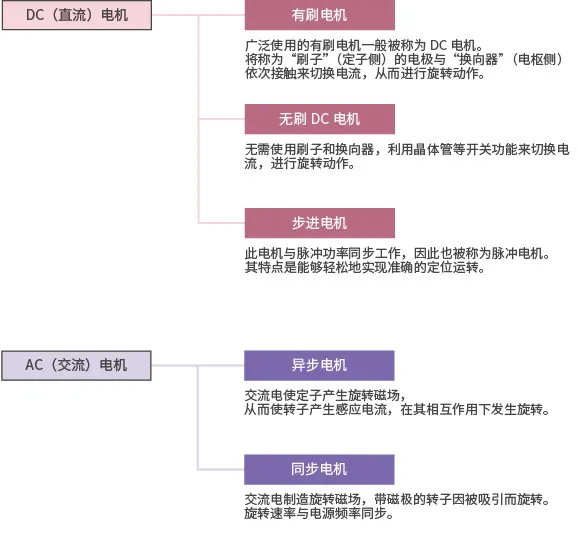
According to the types of power sources driven by motors, they can be divided into DC motors (direct current motors) and AC motors (alternating current motors). According to the principle of motor rotation, it can be roughly divided into the following categories.
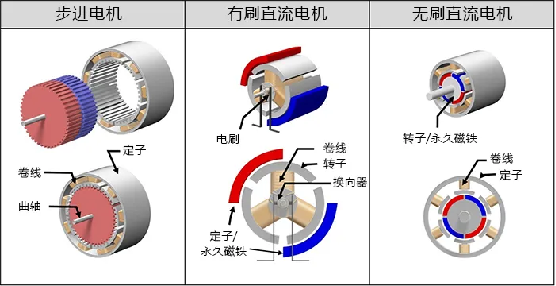
The motor rotates with the help of magnets and magnetic machines
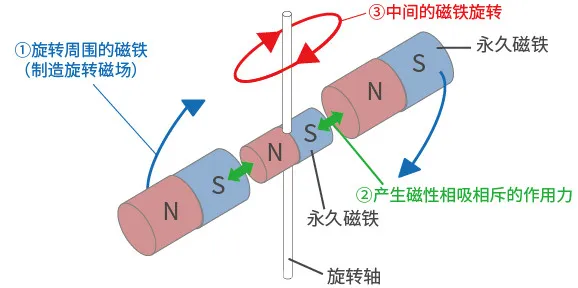
Around the permanent magnet surrounding the axis of rotation,
① We rotate the magnet in a specific way to generate a rotating magnetic field
② At this point, according to the fundamental principle in physics that the N pole and S pole have opposite poles and opposite poles attract and repel each other
③ The magnet with a rotating axis that interacts with the rotating magnetic field will rotate accordingly.
This is the fundamental principle of motor rotation.
Related News