
What is the relationship between the torque and speed of a deceleration motor?
Release Time:
2025-07-29
Deceleration motor is a common type of electric motor, commonly used in applications that require precise control of speed and output torque. Before understanding the relationship between torque and speed of a deceleration motor, let's first understand the basic principles of a deceleration motor.
What is the relationship between the torque and speed of a deceleration motor?
Deceleration motor is a common type of electric motor, commonly used in applications that require precise control of speed and output torque. Before understanding the relationship between torque and speed of a deceleration motor, let's first understand the basic principles of a deceleration motor.
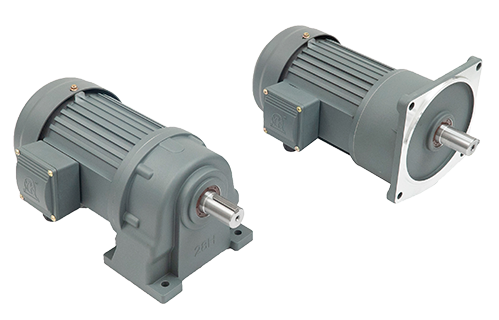
A deceleration motor consists of two parts: an electric motor and a deceleration mechanism. The electric motor is responsible for providing power, while the deceleration mechanism converts the high-speed rotation of the electric motor into a lower output speed. The reduction mechanism is usually composed of transmission devices such as gears, belts, or chains, which reduce the speed of the output shaft by changing the size of the gears.
During the operation of a deceleration motor, torque and speed are two very important parameters. Torque refers to the magnitude of the torque output by the motor, while speed refers to the rotational speed of the shaft output by the motor. The relationship between torque and speed directly affects the performance and application of the motor.
Let's take a look at the mechanical characteristic curve of the deceleration motor. The mechanical characteristic curve is a chart that describes the relationship between the torque and speed of a deceleration motor. In general, the mechanical characteristic curve is a monotonically decreasing curve, that is, as the load increases, the motor speed gradually decreases, but the output torque gradually increases.
When the load is small, the output torque of the deceleration motor is large and the speed is high. This is because the load is small, and the motor needs to provide greater torque to overcome the resistance of the load and maintain a higher speed. In this case, the operating efficiency of the deceleration motor is high, which can meet the needs of many low load applications.
However, as the load increases, the output torque of the deceleration motor will gradually decrease, and the speed will gradually decrease. This is because an increase in load will cause an increase in internal friction and resistance of the deceleration mechanism, resulting in a decrease in output torque and a decrease in rotational speed. Under heavy loads, the deceleration motor may not be able to provide sufficient torque to overcome the load, resulting in a significant decrease in speed.
In addition, the torque and speed of the deceleration motor are also affected by factors such as the design and quality of the motor itself. The design parameters, coil turns, voltage, and current of a motor have a direct impact on torque and speed. Similarly, the type, material, and structure of the deceleration mechanism can also affect the output torque and speed.
To better understand the relationship between torque and speed of a reduction motor, we can introduce the concept of reduction ratio. Reduction ratio is a parameter that describes the relationship between the output speed and input speed of a deceleration motor. The larger the reduction ratio, the lower the output speed and the greater the torque; The smaller the reduction ratio, the higher the output speed and the smaller the torque.
In practical applications, we can use the following formula to calculate the reduction ratio:
Reduction ratio=input speed/output speed
By adjusting the reduction ratio, changes in output speed and torque can be achieved. When lower speed and greater torque are required, a larger reduction ratio can be used; When higher speed and lower torque are required, a smaller reduction ratio can be used. In this way, we can choose the appropriate reduction ratio based on specific application requirements to achieve the best working effect.
In summary, there is a relative relationship between the torque and speed of a deceleration motor. When the load is small, the output torque of the deceleration motor is large and the speed is high; As the load increases, the output torque of the deceleration motor gradually decreases, while the speed gradually decreases. The reduction ratio is an important parameter for adjusting torque and speed, and can be changed to achieve torque and speed requirements under different operating conditions. In summary, we can conclude that there is a relative relationship between the torque and speed of a reduction motor, which can be achieved by adjusting the reduction ratio.
Related News