
Analysis of the difference between explosion-proof motors and explosion-proof motors
Release Time:
2025-07-24
Concept: This is a broad general term. Refers to all electric motors that can operate safely in flammable and explosive environments without igniting surrounding explosive mixtures.
Analysis of the difference between explosion-proof motors and explosion-proof motors
Explosion proof motor:
Concept: This is a broad general term. Refers to all electric motors that can operate safely in flammable and explosive environments without igniting surrounding explosive mixtures.
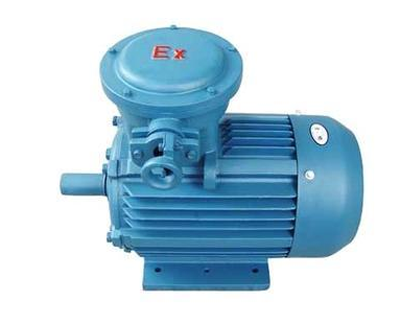
Principle: There are various principles of explosion prevention, not just one method. According to different explosion-proof principles and design standards (such as international IEC standards, Chinese GB 3836 standards, European ATEX directive, North American NEC standards, etc.), explosion-proof motors are divided into various explosion-proof types.
Purpose: To prevent the motor from becoming an ignition source and causing explosions in the surrounding environment during normal operation (generating heat, electric sparks) or internal faults (such as short circuits, overload arcs, sparks, or high temperatures).
Type: Mainly includes the following main explosion-proof types:
Explosion proof type:
Increased safety type:
Positive pressure type:
Intrinsic safety type:
Sealed type:
Oil immersed type:
Dust explosion-proof type:
Non sparking type:
Explosion proof motor:
Concept: It is a commonly used and classic specific explosion-proof type in the "explosion-proof motor" family. Its official name is "Explosion proof Shell Electrical Equipment", and the code is usually Ex d (IEC/GB standard).
Principle: The core lies in its sturdy explosion-proof shell.
If an explosion occurs inside the motor (such as sparks generated by winding short circuits igniting explosive gases invading the shell), this specially designed shell can withstand the pressure of the internal explosion without being damaged.
At the same time, the joint surfaces of the shell (such as between the end cap and the machine base, between the junction box cover and the box body) have specific gaps, lengths, and smoothness (known as "explosion-proof gaps"). When the internal explosion flame is sprayed out into the external environment through these gaps, the flame will be sufficiently cooled, reducing its temperature to a safe level that cannot ignite the external explosive environment.
Simply put, it means' allowing internal explosions, but limiting the explosion to the outer shell and preventing flames and high temperatures from reaching the detonation environment outside the shell '.
characteristic:
The shell is very thick and sturdy (usually made of cast iron or cast steel).
The junction box, end cap and other joint surfaces have precise structures and strict gap control.
Suitable for hazardous areas in Zone 1 and Zone 2 (gas environment) or Zone 21 and Zone 22 (dust environment).
Allow internal sparks and arcs (as long as relevant standards are met).
Summary and key points:
Inclusion relationship: "Explosion proof motor" is a type of "explosion-proof motor".
Explosion proof method: "Explosion proof" is a goal, and there are multiple technical paths to achieve this goal. "Explosion proof" (Ex d) is one of the commonly used, intuitive, and reliable paths, especially in high-risk areas. Other forms such as "increased safety" (Ex e) focus on avoiding sparks, "positive pressure" (Ex p) is isolated with clean gas, and "intrinsic safety" (Ex i) limits energy.
Selection key: When selecting a motor, it is not advisable to simply say that it is an "explosion-proof motor", but rather to clearly indicate which type of explosion-proof motor (Ex d, Ex e, Ex p, etc.) is needed. This depends on:
Types of explosive substances present on site (gas/vapor? Dust?).
The classification level of hazardous areas (Zone 0, Zone 1, Zone 2? Zone 20, Zone 21, Zone 22?).
Relevant national standards or regulatory requirements.
Factors such as cost and maintenance.
Application scenarios: Explosion proof (Ex d) motors are a very common and reliable choice in places where flammable gases may occur continuously or frequently (Zone 1) or occasionally (Zone 2), such as near reaction vessels in chemical plants, pump areas in refineries, and under oil pumps in gas stations.
Therefore, when you see "explosion-proof motor", it may refer to any explosion-proof type; And "explosion-proof motor" specifically refers to explosion-proof motors marked as Ex d that use the principle of explosion-proof enclosure. In practical engineering applications, it is crucial to accurately identify and apply the correct explosion-proof type. Be sure to refer to the nameplate and explosion-proof certification mark of the motor (such as Ex d IIB T4 Gb), and ensure that it is suitable for your specific hazardous area zone.
Related News