
How critical is motor rotor design? Efficiency, torque, and noise all rely on it!
Release Time:
2025-07-10
As the core component for achieving electromechanical energy conversion in motors, the design of the motor rotor directly affects the efficiency, torque, speed, vibration noise, and reliability of the motor. The rotor design of different types of motors (such as asynchronous motors, synchronous motors, stepper motors, etc.) varies significantly, but the core technology revolves around three core goals: magnetic field interaction, mechanical performance, and energy conversion efficiency.
How critical is motor rotor design? Efficiency, torque, and noise all rely on it!
As the core component for achieving electromechanical energy conversion in motors, the design of the motor rotor directly affects the efficiency, torque, speed, vibration noise, and reliability of the motor. The rotor design of different types of motors (such as asynchronous motors, synchronous motors, stepper motors, etc.) varies significantly, but the core technology revolves around three core goals: magnetic field interaction, mechanical performance, and energy conversion efficiency.
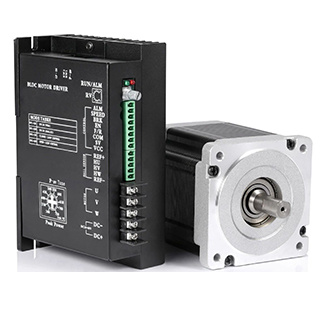
The following analysis focuses on rotor classification, key design technologies, and typical application scenarios:
1、 Core functions and classification of rotors
The core function of the rotor is to generate rotational torque through interaction with the stator magnetic field (electromagnetic induction or permanent magnetic force), and its classification needs to match the type of motor:
Asynchronous motor rotor: relies on stator magnetic field induction to generate current, does not require external power supply, and is divided into squirrel cage type (simple structure, low cost) and wound type (adjustable performance with external resistance).
Synchronous motor rotor: The magnetic field is generated by permanent magnets or excitation windings, and the speed is synchronized with the stator magnetic field. It includes permanent magnet rotors (efficient, high power density) and electrically excited rotors (adjustable magnetic field, suitable for large units).
Stepper motor rotor: Positioned by the magnetic reluctance effect of the tooth slot structure and stator magnetic field, it is divided into permanent magnet type (high torque), reactive type (simple structure), and hybrid type (combining the advantages of both).
DC motor rotor: includes armature winding and commutator, connected to external circuits through electric brushes, generating continuous torque.
2、 Analysis of Core Technologies in Rotor Design
1. Magnetic field design: the core of energy conversion
The magnetic field is the "bridge" between the rotor and stator, and its distribution directly determines the efficiency and torque fluctuations of the motor (such as the resonance problem of stepper motors, which is closely related to magnetic field harmonics).
Permanent magnet rotor magnetic circuit design:
It is necessary to optimize the shape, arrangement (surface mount, built-in, Halbach array), and magnetization direction of permanent magnets (such as neodymium iron boron, samarium cobalt) to reduce magnetic leakage and enhance the sinusoidal nature of the air gap magnetic field. For example, the built-in permanent magnet rotor can increase the reluctance torque through V-shaped or U-shaped arrangement, which is suitable for driving motors in new energy vehicles.
Induction rotor guide bar design:
The guide bars and end ring materials (copper or aluminum) and cross-sectional shapes (circular, rectangular, trapezoidal) of squirrel cage rotors affect the starting performance and efficiency. Trapezoidal conductors can utilize the "skin effect" to increase resistance during startup (increase starting torque) and decrease resistance during operation (reduce losses).
Optimization of air gap length:
The air gap is a magnetic field channel between the rotor and stator. If it is too small, it can easily cause mechanical friction, while if it is too large, it can increase magnetic resistance and reduce magnetic field strength. Usually designed according to the motor power level (micro motors have an air gap of about 0.1-0.5mm, while large motors have an air gap of about 1-5mm).
2. Structural mechanics design: reliability and dynamic performance guarantee
When the rotor rotates at high speed, it needs to withstand centrifugal force, electromagnetic force, and temperature stress. The structural design should take into account strength, stiffness, and lightweight.
Material selection:
Permanent magnet rotor: The permanent magnet needs to be equipped with high-strength retaining rings (such as stainless steel or carbon fiber composite materials) to prevent the permanent magnet from flying off during high-speed rotation.
Induction rotor: stacked silicon steel sheets (reducing iron loss)+cast aluminum/copper guide bars (high conductivity), end rings need to be welded firmly to withstand centrifugal force.
Stepper motor rotor: designed with stacked silicon steel sheets or integrated permanent magnets and iron cores to ensure precise tooth slot positioning.
Dynamic balance design:
Uneven distribution of rotor mass can lead to vibration and noise, which requires static balancing (adjusting mass at low speeds) and dynamic balancing (correcting at high speeds). Especially for high-speed motors (such as drone motors, with speeds greater than 10000rpm), the amount of unbalance must be strictly controlled (usually<0.1g · cm).
3. Loss control: the key to improving efficiency
Rotor losses (copper loss, iron loss, wind friction loss) are the main source of motor heating, and targeted optimization is needed in the design:
Iron consumption inhibition:
The rotor core adopts low loss silicon steel sheets (such as 35W250), and reduces eddy current losses caused by stator magnetic field harmonics through inclined groove design (rotor groove at a certain angle to the axis) (especially suitable for asynchronous motors and stepper motors, which can reduce resonance risk).
Copper consumption optimization:
The cross-sectional area of the winding wires of the wound rotor should match the current density (usually 2-5A/mm ²), and insulation coating should be used to reduce eddy currents; Permanent magnet rotors need to avoid conducting electricity through permanent magnets (such as using insulated magnetic bridges).
Reduced wind and friction consumption:
High speed rotors need to optimize their streamlined shape (such as smooth end caps and reduced protrusions) and use low friction bearings (such as ceramic bearings), especially suitable for high-speed motors in the aerospace industry.
4. Tooth slot structure design: adapted to operating characteristics
The coordination between rotor teeth and stator teeth directly affects the positioning accuracy of motors (such as stepper motors) and torque fluctuations (such as servo motors).
Stepper motor rotor tooth profile:
The number, width, and height of teeth in the tooth slot need to be matched with the stator. By refining the tooth profile (such as increasing the number of teeth), the step angle can be reduced to minimize resonance caused by sudden magnetic field changes. For example, the rotor of a hybrid stepper motor adopts alternating stacking of permanent magnets and silicon steel sheets, and the tooth groove accuracy is controlled within ± 0.01mm.
Synchronous motor rotor convex design:
The shoe shape of convex rotors (such as synchronous generators) needs to be optimized to make the air gap magnetic field close to a sine wave and reduce harmonic torque; Implicit rotors (such as steam turbine generators) are designed with uniformly distributed slots to accommodate high-speed rotation requirements.
Rotor design is the cornerstone of motor performance, requiring a balance between magnetic field interaction, mechanical reliability, loss control, and structural adaptability. In practical engineering, finite element simulation (such as Ansys Maxwell) is often used to optimize the magnetic field distribution, combined with modal analysis to verify the anti vibration ability of the rotor, ultimately achieving the design goals of "high efficiency, low noise, and high reliability". For resonance sensitive scenarios such as stepper motors, the refinement of rotor teeth, the design of inclined slots, and the lightweight of materials are particularly crucial.
Related News