
What is the reason for the high no-load current of the gearbox?
Release Time:
2024-09-27
High temperature environment can make it difficult for the motor and reducer to dissipate heat, resulting in an increase in the resistance of the motor winding and an increase in no-load current. At the same time, high temperature can also affect the performance of the lubricating oil inside the gearbox, reduce the lubrication effect, and increase the frictional resistance. A humid environment may cause a decrease in the insulation performance of the motor, leading to leakage and an increase in no-load current. In addition, humid environments may also cause rusting inside the gearbox, increasing operational resistance.
A reducer is a device used to reduce the output speed of an electric motor, typically consisting of an electric motor, gearbox, and output shaft. Sometimes we may find that the current of the gearbox is very high when it is unloaded. Why is this?
In terms of motors
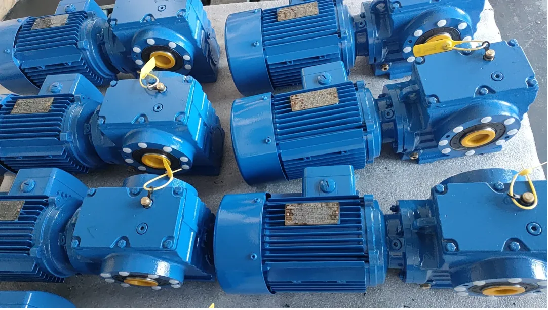
Motor malfunction itself
A local short circuit in the motor winding can cause an increase in no-load current. During long-term operation of the motor, the insulation of the winding may be damaged due to overheating, moisture, mechanical damage, and other reasons, resulting in local short circuits.
Uneven air gap between the stator and rotor of the motor may also cause an increase in no-load current. Uneven air gap can lead to uneven magnetic field distribution, causing the motor to generate a large current during no-load operation to maintain the stability of the magnetic field.
Improper motor selection
If the selected motor power is too high, it will exhibit a larger current when unloaded compared to the load demand of the gearbox. If the motor power is too high, its no-load loss will also increase accordingly, resulting in a larger no-load current.
Improper selection of the number of poles in the motor may also affect the no-load current. Motors with different numbers of poles have different no-load currents at the same speed. If the number of poles is not selected properly, it may cause the no-load current to exceed the normal range.
Regarding the reduction motor
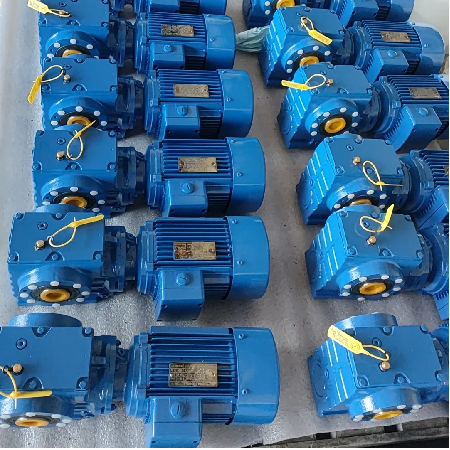
Gearbox assembly issues
The assembly of internal components such as gears and bearings in the gearbox is too tight, which increases the frictional resistance during no-load operation, requiring the motor to output greater power to overcome this resistance, thereby increasing the no-load current.
During the assembly process, if the meshing clearance of the gears is not adjusted properly, a too small meshing clearance will increase the friction between the gears and also cause an increase in no-load current.
Poor lubrication of gearbox
Lack of sufficient lubricating oil or grease will increase the friction coefficient inside the gearbox, increase the resistance during no-load operation, and thus lead to an increase in the no-load current of the motor.
Poor quality of lubricating oil or grease, such as inappropriate viscosity, impurities, etc., can also affect the lubrication effect of the gearbox and increase the no-load current.
Power supply voltage issue
Excessive power supply voltage can increase the magnetic flux of the motor, resulting in an increase in no-load current. Generally speaking, the no-load current of a motor is directly proportional to the power supply voltage.
Large fluctuations in power supply voltage may also affect no-load current. Unstable voltage can cause the magnetic field of the motor to be unstable, and the motor needs to constantly adjust its output power to adapt to voltage changes, which may lead to significant fluctuations in no-load current.
environmental factor
High temperature environment can make it difficult for the motor and reducer to dissipate heat, resulting in an increase in the resistance of the motor winding and an increase in no-load current. At the same time, high temperature can also affect the performance of the lubricating oil inside the gearbox, reduce the lubrication effect, and increase the frictional resistance.
A humid environment may cause a decrease in the insulation performance of the motor, leading to leakage and an increase in no-load current. In addition, humid environments may also cause rusting inside the gearbox, increasing operational resistance.
Related News