
Working principle and application analysis of deceleration motor
Release Time:
2025-07-03
The key to the problem of deceleration motor is to clarify how the two parts of "deceleration" and "motor" work together. We have to start with the motor itself - whether it is a DC motor or an AC motor, they generally output high speed and low torque, which is often not sufficient in practical applications. For example, when an electric push rod needs to move vigorously and slowly, a gearbox is needed to take effect.
Working principle and application analysis of deceleration motor
The key to the problem of deceleration motor is to clarify how the two parts of "deceleration" and "motor" work together. We have to start with the motor itself - whether it is a DC motor or an AC motor, they generally output high speed and low torque, which is often not sufficient in practical applications. For example, when an electric push rod needs to move vigorously and slowly, a gearbox is needed to take effect.
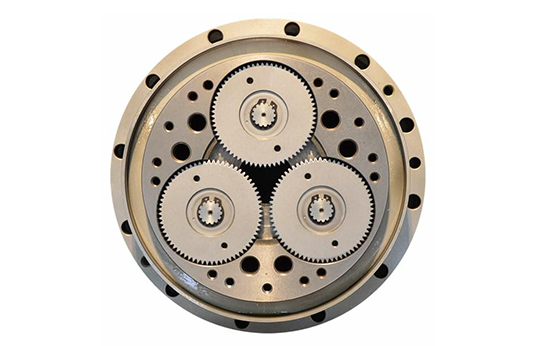
The core of a gearbox lies in the transmission ratio of the gear set. The two mainstream structures, planetary gears and worm gears, each have their own characteristics: planetary gears have high efficiency but complex structures, while worm gears can self lock but have low efficiency.
The key to the problem of deceleration motor is to clarify how the two parts of "deceleration" and "motor" work together. We have to start with the motor itself - whether it is a DC motor or an AC motor, they generally output high speed and low torque, which is often not sufficient in practical applications. For example, when an electric push rod needs to move vigorously and slowly, a gearbox is needed to take effect.
The core of a gearbox lies in the transmission ratio of the gear set. The two mainstream structures, planetary gears and worm gears, each have their own characteristics: planetary gears have high efficiency but complex structures, while worm gears can self lock but have low efficiency.
Why bother slowing down so much. For example, electric rolling shutter doors require
Slow speed and high tension are required for the factory conveyor belt to maintain a constant low speed. The working principle of the reduction motor can be simply summarized as follows: the motor generates high-speed and low torque rotational motion, and the internal reduction mechanism (gearbox) reduces the speed while amplifying the output torque. The entire process achieved the effect of "slowing down and increasing torque".
Energy conversion path: electrical energy → kinetic energy → gear shifting → final output.
1. Motor part
The core of a deceleration motor is an ordinary electric motor (which can be a DC motor, AC induction motor, stepper motor, servo motor, etc.). When the motor is powered on, its internal electromagnetic field interacts with each other (such as the interaction between the stator magnetic field and the rotor magnetic field), driving the motor shaft to rotate at high speed. At this time, the motor outputs high speed (RPM) and relatively low torque (Nm).
2. Reduction mechanism (gearbox) part:
This is the core of the 'deceleration' function. It is usually composed of one or more sets of meshing gears (commonly planetary gears, helical gears, worm gears, etc.). The output shaft of the motor is directly or indirectly connected to the input gear of the reduction mechanism (usually a smaller gear, called the "driving wheel" or "sun gear"). The rotation of the input gear drives one or more output gears that mesh with it, usually larger gears, called "driven wheels" or "planetary gears/teeth"
Circle ".
2. Reduction mechanism (gearbox) part:
Core principle - gear ratio:
The basic principle of gear reduction is based on the gear ratio (transmission ratio). The transmission ratio (i)=output gear teeth (Z out)/input gear teeth (Z_in)
Usually, the input gear (driving wheel) has fewer teeth and the output gear (driven wheel) has more teeth (i.e. Z out>Z in), resulting in a transmission ratio i>1.
Summary of key points
Input: The motor provides high-speed, low torque rotation conversion: The gearbox uses a gear ratio (transmission ratio>1) to achieve: deceleration: output speed=input speed/transmission ratio torque increase: output torque ≈ input torque x transmission ratio x efficiency output: ultimately provides low-speed, high torque rotation to meet practical application needs.
Examples of deceleration mechanism types:
Planetary gear reduction: With a compact structure, high transmission ratio, good rigidity, and high efficiency, it is commonly used in conjunction with servo motors and stepper motors.
Worm gear reduction: single-stage transmission ratio is large, compact structure, smooth operation, low noise, self-locking (worm gear can drive worm gear, but worm gear usually cannot drive worm gear in reverse), relatively low efficiency
Parallel axis gear reduction (helical gear/spur gear): The structure is relatively simple, with high efficiency and low cost. Commonly used in situations with high power or strict volume requirements.
Related News