
Structural and working characteristics of planetary reducers
Release Time:
2025-07-02
Planetary reducer is a widely used mechanical transmission device, and its unique structural design has demonstrated significant advantages in the field of transmission. The following will provide a detailed introduction from two aspects: structural features and working characteristics:
Structural and working characteristics of planetary reducers
Planetary reducer is a widely used mechanical transmission device, and its unique structural design has demonstrated significant advantages in the field of transmission. The following will provide a detailed introduction from two aspects: structural features and working characteristics:
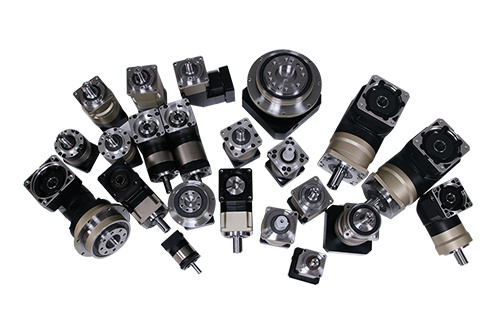
1、 Structural characteristics of planetary reducers
1. Core components
Sun wheel (center wheel): located at the center of the reducer, it is an active input component, usually connected to a power source (such as an electric motor).
Planetary gear: Multiple (usually 3-6) evenly distributed around the sun gear, connected to the output shaft through a planetary carrier, both rotating around its own axis and revolving around the sun gear with the planetary carrier.
Planetary carrier (output shaft): supporting the planetary gears and transmitting power, it is the output component of the gearbox.
Internal gear ring (gear ring): fixed on the housing, meshing with the planetary gear to form a closed transmission structure.
2. Typical structural forms
Single stage planetary reducer: composed of a set of sun gears, planetary gears, inner ring gears, and planetary carriers, with a compact structure and a transmission ratio of generally 2-12.
Multi stage planetary reducer: By connecting multiple sets of single-stage planetary structures (such as 2 or 3 stages) in series, larger transmission ratios (up to tens to hundreds) can be achieved, but the structural complexity increases.
3. Structural design features
Symmetrical arrangement: The planetary gears are evenly distributed, which can balance radial forces, reduce bearing loads, and improve operational stability.
Coaxial transmission: The input shaft and output shaft are coaxial, occupying a small space and facilitating the layout of mechanical systems.
Modular design: Each component (such as planetary carrier, internal gear ring) can be standardized for production, making it easy to maintain and replace.
2、 Working characteristics of planetary gearbox
1. Transmission performance advantages
Large transmission ratio: Through the combined motion of planetary gear revolution and rotation, a single stage can achieve a larger transmission ratio, and a wider range of transmission ratios can be achieved when multiple stages are combined.
High transmission efficiency: The sliding speed between meshing teeth is low, energy loss is small, and the efficiency can usually reach over 90% (single-stage), which is superior to transmission methods such as worm gear and worm gear.
High torque transmission: Multiple planetary gears mesh simultaneously, sharing the load and capable of withstanding large input torque, suitable for heavy-duty scenarios.
2. Operating characteristics
Good stability: The multi tooth meshing and symmetrical structure reduce the impact and vibration during the transmission process, resulting in low operating noise.
Strong overload resistance: The structure has high rigidity and can adapt to short-term overload or impact loads (such as during the start-up phase of construction machinery).
3. Application adaptability
Small size and light weight: compared with the gear reducer with the same transmission ratio, the planetary reducer has a more compact structure and can reduce the weight by 30% -50%.
Flexible installation: It can be designed for horizontal, vertical, or flange installation according to requirements, adapting to different equipment layouts.
4. Limitations
High manufacturing accuracy requirements: The meshing accuracy of planetary gears, sun gears, and internal gear rings directly affects transmission performance, requiring high-precision machining (such as gear grinding technology) and high costs.
Cooling requirements: Under high-speed or heavy load conditions, a cooling system (such as lubricating oil circulation) should be configured to avoid component damage caused by frictional heat generation.
3、 Typical application scenarios
Industrial robots: used for joint transmission, requiring high precision and low backlash (such as RV reducers based on planetary gear principles).
New energy vehicles: Drive the motor reducer, which needs to balance high speed (tens of thousands of revolutions per minute) and high torque output.
Aerospace: Satellite antenna drive, aircraft landing gear retraction system, requiring lightweight and high reliability.
Construction machinery: The walking and rotating mechanism of excavators and cranes, suitable for heavy loads and harsh working conditions.
summarize
The planetary reducer achieves the performance advantages of "small volume, large transmission ratio, and high load capacity" through the unique structure of the "planetary gear system", which is indispensable in fields that require compact transmission and heavy load conditions. The core of its design lies in balancing transmission efficiency, load-bearing capacity, and manufacturing costs. With the development of precision machining technology, planetary reducers are upgrading towards higher precision and lower noise.
Related News