
In depth analysis of speed ratio: key regulatory factors for the performance of planetary gearboxes
Release Time:
2025-07-01
In depth analysis of speed ratio reveals that it is a key regulating factor for the performance of planetary gearboxes. During the operation of planetary gear systems, the speed ratio precisely regulates performance indicators such as output speed, torque, and efficiency by changing the transmission relationship between gears.
In depth analysis of speed ratio: key regulatory factors for the performance of planetary gearboxes
In depth analysis of speed ratio reveals that it is a key regulating factor for the performance of planetary gearboxes. During the operation of planetary gear systems, the speed ratio precisely regulates performance indicators such as output speed, torque, and efficiency by changing the transmission relationship between gears.
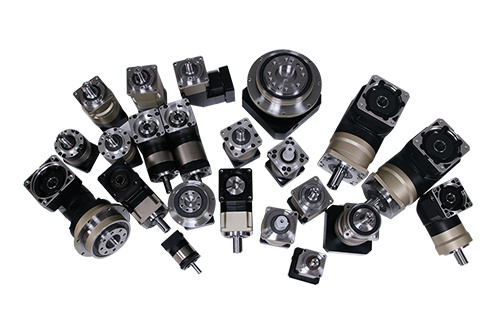
In industrial production, engineers calculate and select appropriate speed ratios based on different load requirements and operating speeds to ensure the stability and reliability of planetary gearboxes while saving energy and efficiency. In the aerospace field, the speed ratio control of harmonic reducers is more precise. In order to meet the operational needs of spacecraft in the space environment, its speed ratio design integrates multidisciplinary technologies such as materials science and precision manufacturing, achieving optimized transmission performance and becoming a core technological highlight of aerospace equipment.
1、 Definition and physical essence of speed ratio
Definition: The speed ratio (i) is the ratio of the input speed (d_in) to the output speed (d_out), i.e. i=d_in/n_out. At the same time, it also represents the theoretical amplification factor of the output torque (Tout) and input torque (Tin) (without considering efficiency loss), that is, Tout ≈ i * Tin * η (where η is the efficiency).
Physical essence: Speed ratio reflects the ability of a planetary gear system to convert high-speed, low torque input into low-speed, high torque output through multi-stage gear meshing. The numerical value directly depends on the structural design of the planetary gear system (the number of teeth relationship between the sun gear, planetary gear, and ring gear).
2、 In depth analysis of speed ratio as a key regulatory factor
The speed ratio deeply regulates the performance and applicability of planetary gearboxes through multiple dimensions, including:
Direct control of output torque and speed:
Torque amplification: This is one of the fundamental functions of planetary gearboxes. The speed ratio i directly determines the factor of torque amplification (approximate value). The larger the i, the greater the output torque, the heavier the load that can be driven, or the greater the resistance that can be overcome. This is crucial for applications that require high torque starting, driving heavy loads, or precisely overcoming friction (such as crane hoists, machine feed, heavy robotic arms).
Speed reduction: The larger the i, the lower the output speed. This can adapt the high speed of the motor (usually several thousand to tens of thousands of RPM) to the low speed range required by the load (possibly as low as tens or even several RPMs). For example, in situations where low-speed precision motion is required (such as telescope tracking, medical equipment), a high reduction ratio is necessary.
Motor matching and system efficiency regulation:
Optimization of motor operating point: Motors typically have high efficiency and strong torque output capability when operating near their rated speed. The choice of speed ratio determines how the load characteristics (torque, speed requirements) are mapped to the operating point of the motor. A suitable speed ratio can allow the motor to operate in its high efficiency zone (near the rated speed), avoiding the motor from operating in the low efficiency low-speed high torque zone or overspeed zone, thereby improving the efficiency and lifespan of the entire drive system.
Inertia matching: The square of the speed ratio i (i ²) determines the moment of inertia of the load converted to the motor shaft. The larger the i, the greater the converted inertia. The ideal speed ratio should achieve a reasonable ratio between the load conversion inertia and the motor rotor inertia (usually between 1:1 and 10:1, depending on the dynamic requirements of the application), in order to achieve good dynamic response (acceleration/deceleration performance) and stability control. Speed ratio is the core adjustment lever for inertia matching.
Regulation of the internal structure and performance of the gearbox:
Series and complexity: The speed ratio range of a single-stage planetary gearbox is limited (usually 3:1 to 10:1). To achieve a higher speed ratio (such as 100:1), multi-stage series connection must be used. An increase in levels means:
The number of parts has increased: more gears, bearings, and planetary carriers.
Axial length increase: The volume of the reducer increases.
Efficiency reduction: Each stage experiences frictional losses, and the series connection of multiple stages leads to a decrease in overall efficiency (η _total=η 1 * η 2 *... * η n). The higher the speed ratio requirement, the more stages it usually means, the greater the efficiency loss, and possibly the higher the temperature rise.
Cost increase: Material, processing, and assembly costs rise.
Accumulated errors and backlash: Multi stage transmission can lead to the accumulation of backlash and transmission errors, affecting accuracy.
Number of teeth design and meshing characteristics: The speed ratio is determined by the combination of the number of teeth of the sun gear, planetary gear, and ring gear. Different combinations of tooth numbers will affect:
Force distribution: Uniformity of load distribution on planetary gears.
Mesh stiffness and vibration noise: Different combinations of tooth numbers may produce different mesh frequencies and vibration characteristics.
Compact structure: Some speed ratios may require specific combinations of teeth to achieve a more compact design.
Bearing lifespan: The output torque (Tout) is directly proportional to the speed ratio i. A higher output torque means that the output shaft bearings bear a greater load, directly affecting the calculation of bearing life (bearing life is inversely proportional to the cube of the load). The selection of speed ratio must consider the bearing capacity.
Indirect control of precision and backlash:
Although the speed ratio itself does not directly change the manufacturing accuracy of individual gears, as mentioned earlier:
Multi stage series connection: High reduction ratios usually require multiple stages, which amplifies the cumulative effects of backlash and transmission errors.
Design considerations: In order to achieve a specific high reduction ratio, special tooth profile designs or pre tensioning structures may be required, which themselves may have an impact on accuracy and backlash (both sides). High precision applications usually choose solutions with fewer stages or adopt low backlash designs (such as helical teeth, special tooth profiles, and pre tensioned bearings) as much as possible while meeting speed ratio requirements.
Regulation of size, weight, and cost:
Torque density: Planetary gearboxes are known for their high torque density. But at the same input power and speed:
Pursuing high reduction ratio (multi-stage) usually means larger size and weight (increased axial length).
Pursuing a medium reduction ratio (single-stage or two-stage) typically achieves optimal torque density (providing greater output torque in a smaller space).
Cost: As mentioned earlier, higher speed ratios (especially when multi-stage implementation is required) mean more parts, more complex manufacturing and assembly, and significantly increased costs.
3、 The core principles and trade-offs of speed ratio selection
Choosing the gear ratio of a planetary gearbox is not necessarily better if it is larger or smaller, but requires careful consideration and optimization among multiple interrelated or even interdependent factors:
The load demand is fundamental: specifying the large output torque (Tout_deq) and operating speed range (n_out_deq) required by the load.
Motor characteristics are the foundation: understanding the rated/peak torque (T-Motor_rated/peak), rated speed (nMotor_rated), and high speed (nMotor_max) of the selected motor.
Core computing and matching:
Lower limit of speed ratio (i_min): determined by the required high output torque and the high available torque of the motor (usually considering peak torque): i_min>=Tout_deq/(Tmotor_peak * η_ est) (where η _ est is the estimated efficiency).
Speed ratio upper limit (i_max): determined by the required low output speed and the low effective operating speed (or high allowable speed) of the motor: i_max<=n_motor_min/n_out_deqzmin (or consider n_motor_max/n_out_deqzmin to ensure that the motor does not overspeed).
Ideal operating point: Within the range determined by i_min and i_max, select the speed ratio i that allows the motor to operate near its rated speed and rated torque at the commonly used load operating point. This usually achieves optimal efficiency and motor lifespan.
Dynamic performance considerations: For applications that require fast start stop and high response, calculate the load conversion inertia (J1 load-ref=J1 load/i ²) to ensure that J1 load-ref/J1 motor is within an acceptable range (such as 1-5 times). Excessive converted inertia will reduce response speed and increase the difficulty of controller adjustment.
Space and cost constraints: Prioritize single-stage or fewer series solutions while meeting performance and dynamic requirements to achieve better efficiency, smaller size/weight, lower cost, and potential higher accuracy (less accumulated backlash).
Accuracy requirements: High precision applications should prioritize single-stage or low backlash design reducers, even if the speed ratio range is limited. If multi-stage high reduction ratio must be used, the accuracy (backlash, transmission error) requirements must be clearly defined, and products with corresponding accuracy levels should be selected.
Life and reliability: Consider the load and life calculation of the output bearing under the selected speed ratio. Special attention should be paid to bearing selection and lubrication for high load and high reduction ratio applications.
4、 Summary: Speed ratio - the "baton" of planetary gearboxes
Speed ratio (i) is much more than just a simple input-output speed ratio number. It is the core regulatory factor and performance hub in the design, selection, and application of planetary gearboxes, profoundly influencing:
Output characteristics: torque, speed
System efficiency and energy consumption
Dynamic response performance: acceleration capability, stability
Internal structure: number of stages, complexity, force distribution
Key performance indicators: accuracy (backlash), lifespan (bearings), noise and vibration
Physical properties: size, weight
cost
Excellent planetary gearbox application design is essentially a process of precise calculation and careful weighing of speed ratios. It requires engineers to have a deep understanding of load requirements, motor characteristics, internal working principles of reducers, and the coupling relationship between various performance parameters, in order to find optimal solutions under many constraints. Choosing the correct speed ratio is like finding the right "gear" for the entire transmission system, allowing the motor and load to work together in optimal condition.
Related News