
What type of control system is servo drive suitable for?
Release Time:
2025-06-28
In the field of modern industrial automation, servo drives, as a high-performance motor control device, are widely used in various precision control systems. So, what type of control system is servo drive suitable for? This article will delve into this topic in depth.
What type of control system is servo drive suitable for?
In the field of modern industrial automation, servo drives, as a high-performance motor control device, are widely used in various precision control systems. So, what type of control system is servo drive suitable for? This article will delve into this topic in depth.
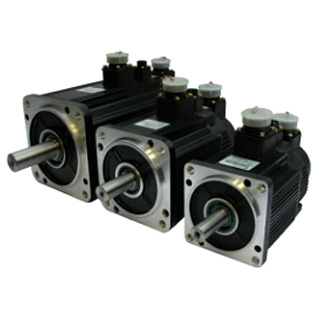
1、 Basic characteristics of servo drives
As the name suggests, servo drives are mainly used to achieve servo control, which precisely controls the output of motors based on input signals (usually position, speed, or force commands). It has the advantages of fast response speed, high control accuracy, and good stability, and can implement complex motion control algorithms to meet the control requirements of high precision and high dynamic performance.
2、 Suitable control system types for servo drives
1. Position control system
The position control system requires the motor to be able to move accurately according to a predetermined trajectory. The servo drive feeds back the actual position information of the motor through an encoder, compares it with the set position, and continuously adjusts the output of the motor through a closed-loop control algorithm to achieve precise position control. Servo drives are widely used in position control systems in fields such as CNC machine tools, robots, and automated assembly lines.
2. Speed control system
The speed control system requires the motor to run smoothly at the predetermined speed. Servo drives achieve stable speed control by detecting the actual speed of the motor and comparing it with the set speed, and adjusting the input voltage or current of the motor. In the fields of textile machinery, papermaking machinery, wind power generation, etc., speed control systems often use servo drives.
3. Force control system
The force control system requires the motor to be able to output a constant force or torque. Servo drives achieve stable force control by detecting the output force or torque of the motor, comparing it with the set value, and adjusting the input parameters of the motor. In the fields of material testing machines, servo presses, precision machining, etc., force control systems often rely on the high-precision control capability of servo drives.
3、 The advantages of servo drives in control systems
1. High precision control
The servo drive adopts a closed-loop control strategy, which can detect and adjust the output of the motor in real time to achieve high-precision control. This is crucial for situations that require precise position, speed, or force control.
2. High dynamic performance
Servo drives have the characteristic of fast response, which can adjust the output of the motor in a short time to adapt to rapidly changing control requirements. This is very advantageous for situations that require high acceleration and high deceleration.
3. Good stability
The servo drive adopts advanced control algorithms and anti-interference technology, which can maintain stable control performance under various working conditions. This is of great significance for control systems that require long-term stable operation.
In summary, servo drives are highly suitable for use in position control systems, speed control systems, and force control systems due to their high precision, high dynamic performance, and good stability. In the field of industrial automation, servo drives have become one of the key equipment for achieving high-precision and high reliability control.
Related News