
The rotation principle and power generation principle of the motor
Release Time:
2025-05-28
To facilitate the subsequent explanation of motor principles, let's review the basic laws/regulations related to current, magnetic field, and force. Although there is a nostalgic feeling, if magnetic components are not frequently used, it is easy to forget these knowledge.
The rotation principle and power generation principle of the motor
The rotation principle of the motor
Current, magnetic field, and force
To facilitate the subsequent explanation of motor principles, let's review the basic laws/regulations related to current, magnetic field, and force. Although there is a nostalgic feeling, if magnetic components are not frequently used, it is easy to forget these knowledge.
Detailed explanation of rotation principle
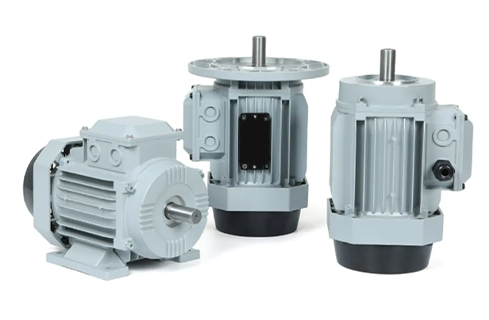
Below is an introduction to the rotation principle of the motor. We will illustrate with pictures and formulas.
When the wire frame is rectangular, the force acting on the current should be taken into account.
The force F acting on the edges a and c is:
Generate torque centered around the central axis.
For example, when considering the state where the rotation angle is only θ, the force acting at right angles to b and d is sin θ, so the torque Ta of part a is represented by the following formula:
If part c is considered in the same way, the torque is doubled and a torque calculated by the following formula is generated:
Since the area of the rectangle is S=h · l, substituting it into the above formula yields the following result:
This formula is not only applicable to rectangles, but also to other common shapes such as circles. The motor utilizes this principle.
Key points:
The rotation principle of a motor follows the laws related to current, magnetic field, and force.
Related News