
Analysis and Solutions to Common Malfunctions of Vertical and Horizontal Gearboxes
Release Time:
2025-05-14
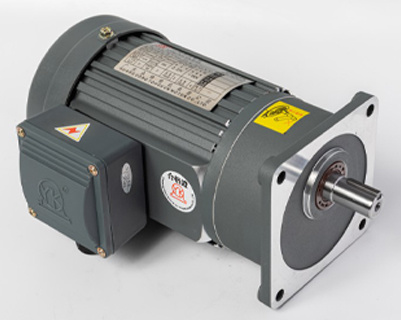
Vertical and horizontal reduction motor, also known as "little diamond", is a common mechanical transmission device used to reduce the speed of rotational motion and increase torque. It usually consists of an input shaft, an output shaft, a gear set, and a housing. Due to friction, vibration, insulation aging, and other reasons, the electric motor of the horizontal and vertical speed reduction machine is inevitably prone to malfunction during operation. If these faults are checked, invented, and eliminated immediately, they can effectively prevent the occurrence of accidents. Here are some common problems and troubleshooting methods.
Analysis and Solutions to Common Malfunctions of Vertical and Horizontal Gearboxes
Vertical and horizontal reduction motor, also known as "little diamond", is a common mechanical transmission device used to reduce the speed of rotational motion and increase torque. It usually consists of an input shaft, an output shaft, a gear set, and a housing. Due to friction, vibration, insulation aging, and other reasons, the electric motor of the horizontal and vertical speed reduction machine is inevitably prone to malfunction during operation. If these faults are checked, invented, and eliminated immediately, they can effectively prevent the occurrence of accidents. Here are some common problems and troubleshooting methods.
Listen to the sound
Listen to the sound and carefully identify the fault point. During the operation of the AC asynchronous motor, if a faint "buzzing" sound is found without any fluctuations, it is a normal sound. If the sound is coarse and has sharp "buzzing" or "hissing" sounds, it is a precursor to a fault. The following reasons should be considered:
(1) The vibration and fluctuating temperature of a motor with loose iron core during operation can cause deformation of the fixing bolts of the iron core, resulting in loose silicon steel sheets and generating large electromagnetic noise.
(2) Rotor noise, the sound produced by the rotation of the rotor, is a "whining" sound produced by the cooling fan. If there is a "thumping" sound like a drum, it is caused by the loosening of the fit between the rotor iron core and the shaft due to the acceleration torque of the motor during sudden start, stop, reverse braking, and other variable speed situations. Mild cases can continue to be used, while severe cases can be disassembled for inspection and repair.
(3) During operation, it is necessary to pay attention to the changes in the sound of the bearings. By touching one end of the screwdriver on the bearing cover and the other end on the ear, the changes in the internal sound of the motor can be heard. Different parts and faults produce different sounds. The sound of "creaking" is caused by the irregular movement of the rolling gun inside the bearing, which is related to the clearance of the bearing and the state of the lubricating grease. The "sizzling" sound is a metal friction sound, usually caused by friction due to lack of oil in the bearing. The bearing should be disassembled and lubricating grease should be added.
Utilize the sense of smell
Using the sense of smell, analyze that the faulty motor does not have any odor during normal operation. If an odor is detected, it is a fault signal, such as a burnt smell, which is emitted by the insulation material during grilling, and can even smoke as the motor temperature increases; If there is a burnt oil smell, it is mostly due to the lack of oil in the bearing, and the odor caused by the evaporation of oil and gas when approaching the dry grinding state.
Utilize the tactile sensation
By touching the casing of the TV with your hand, you can roughly determine the temperature. If you feel very hot and the temperature is high when you touch the motor casing with your hand, you should check the cause, such as heavy load or high voltage, and then troubleshoot the problem based on the cause.
Related News