
Summarize the types, advantages, disadvantages, and applications of various motors in one article
Release Time:
2025-05-10
What is the difference between brushless motors and brushed motors? What is the difference between synchronous motor and asynchronous motor? Are all servo motors AC motors? Are all servo motors synchronous motors? Do stepper motors belong to DC motors or AC motors? Does the servo motor belong to servo motors, etc
Summarize the types, advantages, disadvantages, and applications of various motors in one article
What is the difference between brushless motors and brushed motors? What is the difference between synchronous motor and asynchronous motor? Are all servo motors AC motors? Are all servo motors synchronous motors? Do stepper motors belong to DC motors or AC motors? Does the servo motor belong to servo motors, etc
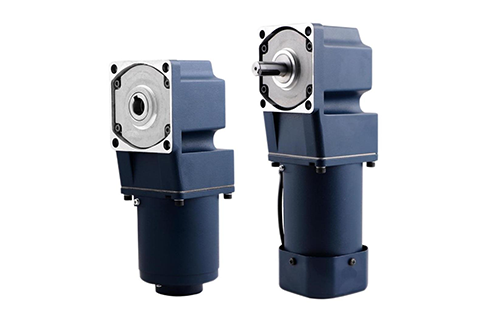
DC motor - brushed motor
Even top and bottom students who have studied high school physics know that in order to study the force acting on an electrified conductor in a magnetic field, we have trained our left hand to a broken palm, which is also the principle of DC motors.
All motors are composed of a stator and a rotor. In a DC motor, in order to make the rotor rotate, the direction of the current needs to be constantly changed, otherwise the rotor can only rotate half a turn, just like a bicycle pedal. So DC motors require a commutator.
Broadly speaking, DC motors include brushed motors and brushless motors.
Brushed motor, also known as DC motor or carbon brush motor, commonly referred to as DC motor, refers to brushed DC motor. It adopts mechanical commutation, the external magnet does not move, and the internal coil (armature) moves. The commutator and rotor coil rotate together, while the brush and magnet do not move. Therefore, the commutator and brush rub against each other to complete the switching of current direction.
Disadvantages of brushed motors:
1. The sparks generated by mechanical commutation cause friction between the commutator and the electric brush, electromagnetic interference, high noise, and short lifespan.
2. Poor reliability, frequent failures, and the need for frequent maintenance.
3. Due to the existence of the commutator, the rotor inertia is limited, the high speed is restricted, and the dynamic performance is affected.
Since it has so many drawbacks, why is it still widely used? It has high torque, simple structure, easy maintenance (i.e. replacing carbon brushes), and is cheap.
Brushless motor, also known as DC variable frequency motor (BLDC) in some fields, uses electronic commutation (Hall sensor), and the coil (armature) does not move magnetically. At this time, the permanent magnet can be outside or inside the coil, so there is a distinction between outer rotor brushless motor and inner rotor brushless motor.
The structure of a brushless motor is the same as that of a permanent magnet synchronous motor.
However, a single brushless motor is not a complete power system, and brushless motors must be controlled by a brushless controller, also known as an electric controller, to achieve continuous operation.
Related News