
Reducer: Detailed explanation of working principle, type, and key production steps
Release Time:
2024-09-21
Conduct no-load and load tests on the assembled reducer to check whether its transmission performance, noise, temperature and other indicators meet the requirements. Spraying and packaging: Spray the reducer to improve its anti-corrosion performance.
Gearboxes play a crucial role in modern mechanical equipment, as they play a critical role in reducing speed and increasing torque. In this article, we will explore in detail the working principle, different types, and key steps in the production process of reducers.
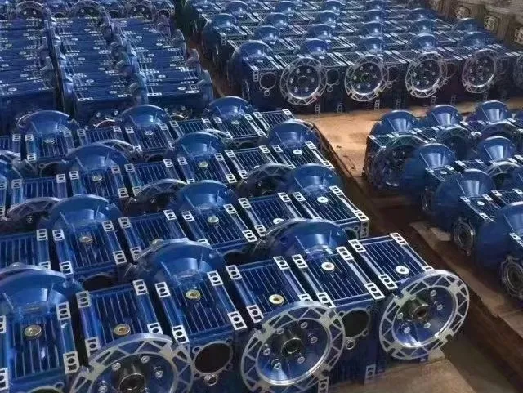
Working principle of gearbox
The core part of a reducer is a transmission system composed of gears. It typically includes one or more input gears and an output gear. The input gear is connected to the motor or other power source, while the output gear is connected to the working machinery that requires deceleration. When the input gear rotates, it drives the output gear to rotate through the meshing between the gears, thereby achieving the effect of reducing speed and increasing torque.
Types of reducers
Worm gear reducer:
Worm gear reducer adopts the meshing of worm gear and worm, with self-locking function, suitable for occasions requiring low speed and high torque.
Planetary reducer:
The planetary reducer adopts the meshing of planetary gears and sun gears, which has high transmission efficiency and accuracy, and is suitable for high-precision and high reliability occasions.
Parallel axis reducer:
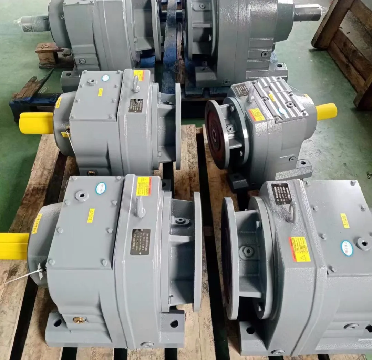
The parallel axis reducer adopts gear meshing on the parallel axis, which is suitable for situations that require larger transmission ratios and higher torque.
Helical gear reducer:
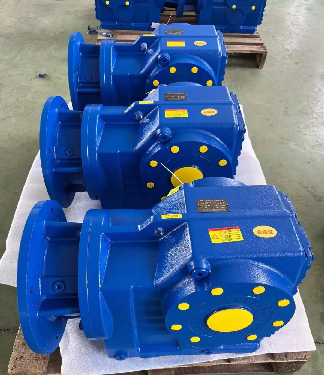
The helical gear reducer adopts helical gear meshing, which has high transmission efficiency and torque capacity, and is suitable for various industrial occasions.
Key steps in the production process of gearboxes
Raw material preparation:
The production of reducers first requires high-quality raw materials, including steel, cast iron, aluminum, etc. The quality and performance of raw materials directly affect the quality of the gearbox.
Design:
Design suitable reducer structure, size, and transmission ratio based on customer needs and application scenarios. During the design process, factors such as the load-bearing capacity, transmission efficiency, noise, and lifespan of the gearbox should be considered.
Casting:
For some complex gearbox parts, such as worm gears, worm gears, etc., casting technology is used to manufacture blanks. During the casting process, attention should be paid to controlling the dimensional accuracy, surface quality, and internal defects of the castings.
Machining:
For the cast blank, precision machining is carried out through processes such as CNC machining, grinding, milling, etc. to achieve the required design accuracy.
Gear meshing adjustment:
For planetary reducers, worm gear reducers, etc., gear meshing adjustment is required to ensure smooth meshing between gears, low noise, and long service life.
Assembly:
Assemble the processed parts, including gears, bearings, seals, etc. During the assembly process, it is necessary to ensure the correct position and clearance between each component.
Debugging:
Conduct no-load and load tests on the assembled reducer to check whether its transmission performance, noise, temperature and other indicators meet the requirements.
Spraying and packaging:
Spray the reducer to improve its anti-corrosion performance.
Related News