
Practical calculation guide for the use of reducers and motor power
Release Time:
2025-05-07
The working state of the prime mover has a significant impact on the utilization coefficient of the gearbox. When the prime mover operates smoothly without impact, the utilization coefficient of the reducer is 1.00; If subjected to a slight impact, the coefficient increases to 1.10; When subjected to moderate impact, the coefficient reaches 1.25; In severe impact situations, the utilization coefficient is as high as 1.50. This coefficient is crucial for calculating the output torque of the motor.
Practical calculation guide for the use of reducers and motor power
1. Gearbox utilization coefficient u
The working state of the prime mover has a significant impact on the utilization coefficient of the gearbox. When the prime mover operates smoothly without impact, the utilization coefficient of the reducer is 1.00; If subjected to a slight impact, the coefficient increases to 1.10; When subjected to moderate impact, the coefficient reaches 1.25; In severe impact situations, the utilization coefficient is as high as 1.50. This coefficient is crucial for calculating the output torque of the motor.
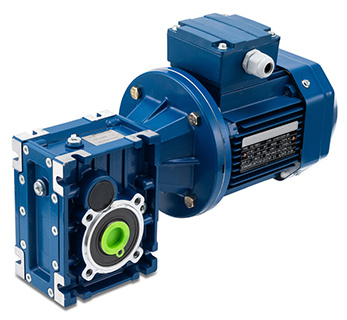
In addition, there is a close relationship between the output torque of the motor and the motor speed and power. In the application of reducers, we need to comprehensively consider these factors to accurately calculate the motor output torque and ensure that the reducer can work efficiently and stably.
2. Formula: T=9550P/n
This formula is commonly used in engineering to calculate the relationship between torque, power, and speed. Among them, T represents torque, measured in N M. 9550 is a constant, there is no need to delve into its source; P represents the power of the motor, measured in KW; N is the output speed, measured in revolutions per minute.
It should be noted that when calculating torque through a gearbox, the impact of efficiency loss during gear transmission must be considered.
The calculation formula for servo motor torque is: T=F × R × reduction ratio.
Among them, F represents the force acting on the object, measured in newtons; R is the radius of action of the force, measured in meters; The reduction ratio refers to the ratio of the output speed of the servo motor to the load speed.
For example, if you want to drive an object with a mass of 100kg, a radius of action R of 50mm, and a reduction ratio of 1:50, the torque of the servo motor can be calculated using the above formula. The specific calculation process is as follows: convert the mass to gravity, which is 100kg × 9.8N/kg; Then, multiply the gravity by the radius of action and the reduction ratio to obtain the torque of the servo motor. In this example, the calculated result is 1.98N M。
In addition, it is also important to pay attention to the calculation formula for the torque of the gearbox. Although there is some similarity with the calculation of the torque of the servo motor, the specific parameters and calculation methods may be different.
3. Definition of Speed Ratio
Speed ratio, also known as "transmission ratio", refers to the ratio between the output speed of the servo motor and the output speed of the gearbox. The calculation formula is: speed ratio=motor output speed ÷ reducer output speed. This parameter is crucial for calculating the torque of servo motors and reducers, as well as the transmission efficiency of the entire system.
4. Calculation of gearbox torque
Given the power, speed ratio, and coefficient of use of the motor, we can calculate the torque of the gearbox according to the following formula:
Gearbox torque=9550 × Motor power p ÷ Motor power input speed n1 × Speed ratio i × Usage coefficient u
This formula combines the power and speed of the motor, as well as the speed ratio and utilization coefficient of the gearbox, and is a key step in calculating the torque of the gearbox.
5. Calculation of the required motor power for the reducer
Given the torque, output speed, and coefficient of use of the gearbox, we can use the following formula to calculate the required motor power:
Motor power=Torque T ÷ 9550 × Motor power input speed n1 ÷ Speed ratio i ÷ Usage coefficient u
Related News