
Three minutes to understand the basic concepts and selection calculations of reducers
Release Time:
2025-05-07
In simpler terms, a gearbox is a "speed reducer and power amplifier". Just like a car shifting gears and climbing hills, the gearbox can convert the high-speed rotation of the motor into low-speed high torque output. For example, if a motor rotates 1500 revolutions per minute and is "processed" by a reducer, the output end may only rotate 30 revolutions, but the force can lift hundreds of pounds of weight!
Three minutes to understand the basic concepts and selection calculations of reducers
What is a gearbox?
In simpler terms, a gearbox is a "speed reducer and power amplifier".
Just like a car shifting gears and climbing hills, the gearbox can convert the high-speed rotation of the motor into low-speed high torque output. For example, if a motor rotates 1500 revolutions per minute and is "processed" by a reducer, the output end may only rotate 30 revolutions, but the force can lift hundreds of pounds of weight!
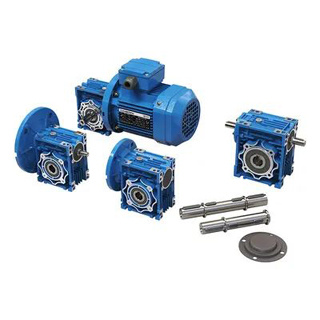
Composition of gearbox
We have learned what a gearbox is, and now let's take a closer look at the components of a gearbox. It mainly consists of three parts
1. Gear set: Like a bicycle gearbox, gears of different sizes bite to change the speed.
2. Bearings: Precision components that make rotation smoother.
3. Box: Generally made of metal material, it protects the internal components.
Four common types of reducers
type
advantage
disadvantage
Usage scenario
gear reducer
Durable and affordable
The noise is slightly loud
Conveyor belts, mixers, etc
planetary reducer
High precision and compact structure
complex structure
Mechanical arms, machine tools, etc
worm gear reducer
Self locking safety, high speed ratio
Low efficiency
Cranes, elevators, etc
Harmonic Drive
Zero backlash, long lifespan
Repair troublesome
Mining machinery, etc
Five step selection method for gearbox
1. Check the usage of the load
Stable load: such as conveyor belts, fans, etc
Impact load: Stamping machine, crusher
2. Formula for calculating load torque
Required torque T=9550 x motor power (kW) ÷ output speed (r/min)
Case: A 0.75kW motor needs to output 30r/min
Torque T=9550 × 0.75 ÷ 30 ≈ 239N · m
3. Determine the reduction ratio
Speed ratio i=motor speed (input speed) ÷ required output speed (output speed)
(Common speed ratios range from 5-100, and special models can reach 10000:1)
4. Verify the power meter
Refer to the manufacturer's parameter table and select the model with a bearing capacity ≥ calculated value, leaving a safety margin of torque × 1.2~1.5 times
5. Measure installation dimensions
Confirm whether the flange form (flange type, shaft mounted type), installation size, and shaft diameter match the equipment
Related News