
Single phase motor forward and reverse foolproof tutorial
Release Time:
2025-04-28
Are you still trying to reverse the wiring of the single-phase motor? Don't try blindly anymore! Mastering this' resistance measurement method ', identifying the main and auxiliary windings in 3 seconds, and completing the positive and negative switching wires in 5 minutes, even experienced electricians exclaim that this is a worry free practical skill!
Single phase motor forward and reverse foolproof tutorial
Are you still trying to reverse the wiring of the single-phase motor? Don't try blindly anymore! Mastering this' resistance measurement method ', identifying the main and auxiliary windings in 3 seconds, and completing the positive and negative switching wires in 5 minutes, even experienced electricians exclaim that this is a worry free practical skill!
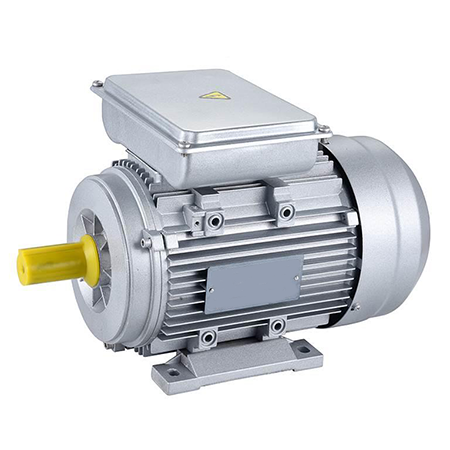
1、 The Secret of Single phase Motor Winding: The Truth of Three Wiring Terminals
Why do single-phase motors have three wiring terminals? Main winding+secondary winding=golden partner!
Structural disassembly:
2、 Divine skill: Measuring resistance with a multimeter, distinguishing between main and auxiliary windings in 3 seconds
1. Operation steps:
2. Mark the winding:
Main winding: the two ends with low resistance.
Secondary winding: the two ends in the middle of the resistance value (excluding the common terminal).
Connect the capacitor to both ends with a high resistance value (i.e. main+auxiliary series connection).
The live wire of the power supply is connected to the main winding, and the neutral wire is connected to the common terminal.
Principle: The main winding is powered on early, the secondary winding is shifted by capacitance, and the motor rotates clockwise.
For example, if the measured resistances are 5 Ω (small), 25 Ω (large), and 20 Ω (middle), then:
Main winding=5 Ω at both ends, secondary winding=20 Ω at both ends, common terminal=the remaining one.
3、 Positive and negative adapter cables: The position of the capacitor determines life and death!
Core mnemonic: Connect the capacitor to both ends with a high resistance value, and provide power to the main/auxiliary windings
Key Reminder:
The capacitor is always located at both ends of the high resistance value, and only the live wire is connected to the main/auxiliary winding!
When unsure: Take a photo of the original wiring before disassembling the motor to avoid explosion.
Positive adapter cable:
Connect the capacitor to both ends with a high resistance value (i.e. main+auxiliary series connection).
The live wire of the power supply is connected to the main winding, and the neutral wire is connected to the common terminal.
Principle: The main winding is powered on early, the secondary winding is shifted by capacitance, and the motor rotates clockwise.
Reverse wiring: Connect the capacitor to both ends of the high resistance value (do not move!). Connect the live wire of the power supply to the secondary winding, and connect the neutral wire to the common terminal.
Principle: The secondary winding is energized early, the main winding shifts phase, and the motor rotates counterclockwise.
Related News