
Why can variable frequency motors outperform ordinary motors?
Release Time:
2025-04-26
The speed regulation and control of electric motors are one of the fundamental technologies for various types of machinery in industry and agriculture, as well as office and household electrical equipment. With the amazing development of power electronics technology and microelectronics technology, the use of "dedicated variable frequency induction motor+frequency converter" AC speed regulation method is leading a revolution in the field of speed regulation that replaces traditional speed regulation methods with its performance and economy. The good news it brings to various industries lies in greatly improving the degree of mechanical automation and production efficiency, saving energy, improving product qualification rate and quality, correspondingly increasing power system capacity, miniaturizing equipment, and increasing comfort. Currently, it is rapidly replacing traditional mechanical speed regulation and DC speed regulation solutions.
Why can variable frequency motors outperform ordinary motors?
The speed regulation and control of electric motors are one of the fundamental technologies for various types of machinery in industry and agriculture, as well as office and household electrical equipment. With the amazing development of power electronics technology and microelectronics technology, the use of "dedicated variable frequency induction motor+frequency converter" AC speed regulation method is leading a revolution in the field of speed regulation that replaces traditional speed regulation methods with its performance and economy. The good news it brings to various industries lies in greatly improving the degree of mechanical automation and production efficiency, saving energy, improving product qualification rate and quality, correspondingly increasing power system capacity, miniaturizing equipment, and increasing comfort. Currently, it is rapidly replacing traditional mechanical speed regulation and DC speed regulation solutions.
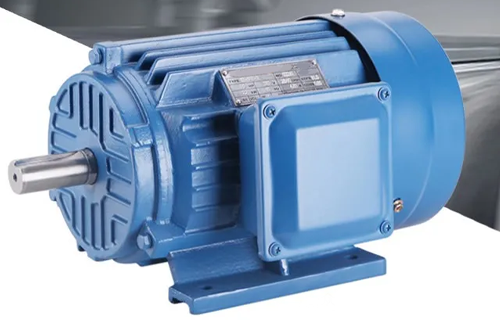
Due to the particularity of variable frequency power supplies and the system's requirements for high-speed or low-speed operation, dynamic response to speed, etc., strict requirements have been put forward for the electric motor as the main power source, which has brought new challenges to the motor in terms of electromagnetic, structural, and insulation aspects.
Variable frequency speed regulation has become the mainstream speed regulation solution and can be widely used in various industries for continuously variable transmission.
Especially with the increasingly widespread application of frequency converters in the field of industrial control, the use of variable frequency motors is also becoming more widespread. It can be said that due to the superiority of variable frequency motors over ordinary motors in variable frequency control, we can easily see the presence of variable frequency motors wherever frequency converters are used.
The difference between ordinary motors and variable frequency motors
1、 Ordinary asynchronous motors are designed for constant frequency and constant voltage, and cannot fully adapt to the requirements of variable frequency speed regulation
The following are the effects of frequency converters on motors:
1. The efficiency and temperature rise of electric motors
Regardless of the form of frequency converter, it generates varying degrees of harmonic voltage and current during operation, causing the motor to operate under non sinusoidal voltage and current. According to the information, taking the commonly used sine wave PWM frequency converter as an example, its low order harmonics are basically zero, and the remaining high-order harmonic components that are about twice the carrier frequency are 2u+1 (u is the modulation ratio).
Higher order harmonics can cause an increase in stator copper loss, rotor copper (aluminum) loss, iron loss, and additional losses in electric motors, with rotor copper (aluminum) loss being the most significant. Because asynchronous motors rotate at a synchronous speed close to the fundamental frequency, high harmonic voltages cutting the rotor bars with large slip will result in significant rotor losses. In addition, the additional copper consumption caused by skin effect also needs to be considered. These losses will cause the motor to generate additional heat, reduce efficiency, and decrease output power. If a regular three-phase asynchronous motor is operated under non sinusoidal power supply conditions output by a frequency converter, its temperature rise will generally increase by 10% -20%.
2. Insulation strength issue of electric motor
At present, many small and medium-sized frequency converters use PWM control method. His carrier frequency is about several thousand to tens of kilohertz, which means that the stator winding of the motor has to withstand a high voltage rise rate, equivalent to applying a steep impulse voltage to the motor, making the inter turn insulation of the motor more severely tested. In addition, the rectangular chopper impulse voltage generated by the PWM inverter is superimposed on the operating voltage of the motor, which poses a threat to the ground insulation of the motor. The ground insulation will accelerate aging under repeated high-voltage impacts.
3. Harmonic electromagnetic noise and vibration
When ordinary asynchronous motors are powered by frequency converters, the vibration and noise caused by electromagnetic, mechanical, ventilation and other factors become more complex. The various time harmonics contained in the variable frequency power supply interfere with the inherent spatial harmonics of the electromagnetic part of the motor, forming various electromagnetic excitation forces. When the frequency of electromagnetic waves is consistent or close to the natural vibration frequency of the motor body, resonance phenomenon will occur, thereby increasing noise. Due to the wide operating frequency range and large speed variation range of electric motors, it is difficult for the frequencies of various electromagnetic waves to avoid the natural vibration frequencies of the various components of the electric motor.
Related News