
[Today's Perspective] The working principle of servo motors is completely understood!
Release Time:
2025-04-25
A servo motor is a type of motor that can achieve high-precision motion control, and its core lies in a closed-loop feedback control system. Through real-time monitoring and adjustment, it can accurately control position, speed, and torque. The following is a detailed analysis of its working principle:
[Today's Perspective] The working principle of servo motors is completely understood!
A servo motor is a type of motor that can achieve high-precision motion control, and its core lies in a closed-loop feedback control system. Through real-time monitoring and adjustment, it can accurately control position, speed, and torque. The following is a detailed analysis of its working principle:
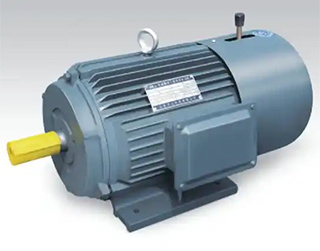
1、 The core components of servo motors
Motor body
Usually used as permanent magnet synchronous motors (AC servo) or DC brushless motors, responsible for converting electrical energy into mechanical energy.
Encoder (feedback device)
Installed on the motor shaft, it can detect the position, speed, or acceleration of the rotor in real time. Common types include photoelectric encoders and magnetic encoders.
Controller (such as PLC, motion control card)
Receive external instructions (such as target position), calculate errors based on feedback signals, and output adjustment signals.
Driver (power amplifier)
Amplify the weak current signal of the controller into high-power current to drive the motor, and control the direction and torque of the motor.
2、 Workflow: The Essence of Closed Loop Control
Input command
User set target parameters (such as rotating the motor 90 ° and maintaining a speed of 1000rpm).
Controller calculation error
The encoder provides real-time feedback on the current position/velocity, and the controller compares the target value with the actual value to calculate the error (such as a difference of 30 °).
PID algorithm adjustment
The controller generates correction signals through proportional (P), integral (I), and derivative (D) algorithms to dynamically eliminate errors.
Proportional control: Adjust the output based on the current error size.
Integral control: Accumulate historical errors and eliminate static errors (such as long-term deviations).
Differential control: Predicting future error trends and suppressing oscillations.
Drive execution action
Convert the correction signal into three-phase current to drive the motor to rotate.
Real time feedback loop
The encoder continuously monitors and forms a closed loop of "instruction → execution → feedback → adjustment" until the error approaches zero.
3、 The core advantages of servo motors
high-precision
Closed loop control can control the position error within ± 0.01 ° (depending on the encoder resolution).
quick response
Millisecond level adjustment capability, suitable for scenarios with frequent start stop and reversing.
Strong overload capacity
Short term withstand of 3 times the rated torque to cope with sudden load changes.
Wide speed range
Low speed stable (0.1rpm), high speed can reach thousands of revolutions per minute.
4、 Typical application scenarios
Industrial robots: precise joint positioning, with a repeat positioning accuracy of ± 0.02mm.
CNC machine tool: synchronous control of spindle and feed axis to achieve complex machining.
Automated production line: synchronous conveyor belt and material sorting.
Drone/model aircraft: gimbal stability, servo control.
Medical equipment: surgical robots, CT scanner rotation control.
Related News