
Conventional classification and introduction of reducers
Release Time:
2024-09-20
In summary, planetary gearboxes, as a type of gearbox that adopts the principle of planetary transmission, have the characteristics of compact structure and high torque output. Planetary reducers are widely used in fields such as machine tools and industrial automation equipment, achieving precise motion control through reduction transmission. Planetary reducers have the advantages of small size, high transmission efficiency, and good overlap ratio, but it is necessary to pay attention to lubrication, avoid overloading and overspeed during use. The correct selection and use of planetary gearboxes are of great significance for improving work efficiency and system performance.
1、 Overview of gearbox
A reducer is a widely used mechanical transmission device used to reduce input speed and increase output torque. The main function of a reducer is to convert the high-speed rotating power system into the required low-speed high torque output, enabling effective control and driving of the workload. Reducer has the advantages of high stability, high transmission efficiency, and high transmission accuracy, so it is widely used in many industries, such as mechanical manufacturing, machine tools, food processing, mining, metallurgy, and so on.
2、 Basic principle of gearbox
The basic principle of a gearbox is to convert input high-speed rotational motion into output low-speed rotational motion by transmitting power and motion. A reducer is generally composed of an input shaft, an output shaft, a gear transmission mechanism, and a housing. When the input shaft rotates, the power transmitted to the gear transmission mechanism will be transmitted and converted, ultimately driving the output shaft to rotate. The reduction ratio is an important parameter of the gearbox, which determines the ratio of the input shaft speed to the output shaft speed. In practical applications, it is also necessary to consider indicators such as the torque transmission capacity, transmission efficiency, noise, and lifespan of the gearbox.
2、 Classification of reducers
Gearboxes can be classified into various types based on their structure and transmission method, including gear reducers, planetary reducers, and worm reducers. Each type of gearbox has its applicable fields and characteristics. Gear reducer is a common type of deceleration machinery, mainly composed of gears. The working principle of a gear reducer is to transmit power through gears with different numbers of teeth, achieving a decrease in speed and an increase in torque. Gear reducers are widely used in industrial production, such as lifting machinery, metallurgical equipment, etc. The characteristics of gear reducers are simple structure, high transmission efficiency, and strong load-bearing capacity, but the transmission accuracy is relatively low. The planetary gearbox adopts the principle of planetary transmission, consisting of a sun gear, planetary gears, and internal gears. Planetary reducers have the characteristics of compact structure and high torque output, making them suitable for applications that require high volume and torque. Planetary reducers are widely used in fields such as machine tools and industrial automation equipment.
Worm gear reducer is a commonly used type of deceleration machinery, consisting of a worm and a worm wheel. The characteristics of worm gear reducer are large transmission ratio and smooth transmission, suitable for occasions that require large transmission ratio and lower speed. Worm gear reducers are widely used in conveying machinery, chemical equipment, etc.
In addition to the common types of gearboxes mentioned above, there are also other types of gearboxes, such as planetary gear gearboxes and cylindrical gear gearboxes, which play important roles in different industries and applications.
In summary, reducers can be classified into various types based on different transmission methods and structures. Understanding the characteristics and scope of application of each type of gearbox is of great significance for the correct selection and application of gearboxes. Different types of reducers play a crucial role in power transmission and regulation in industrial production, improving work efficiency and product quality. With the development of technology and the continuous growth of demand, reducers will continue to play an important role in future applications.
1. Introduction to Gear Reducer
Gear reducer is a common type of deceleration machinery, mainly composed of gears. The working principle of a gear reducer is to transmit power through gears with different numbers of teeth, achieving a decrease in speed and an increase in torque. Gear reducers are widely used in industrial production, such as lifting machinery, metallurgical equipment, etc.
Gear reducers have the characteristics of simple structure, high transmission efficiency, and strong load-bearing capacity. The transmission path is transmitted step by step by gears, and each pair of gears continuously reduces the power during the transmission process through meshing. The reduction ratio of a gear reducer is determined by the number of teeth on the gears, and different gear combinations can achieve different reduction ratios to meet different work requirements.
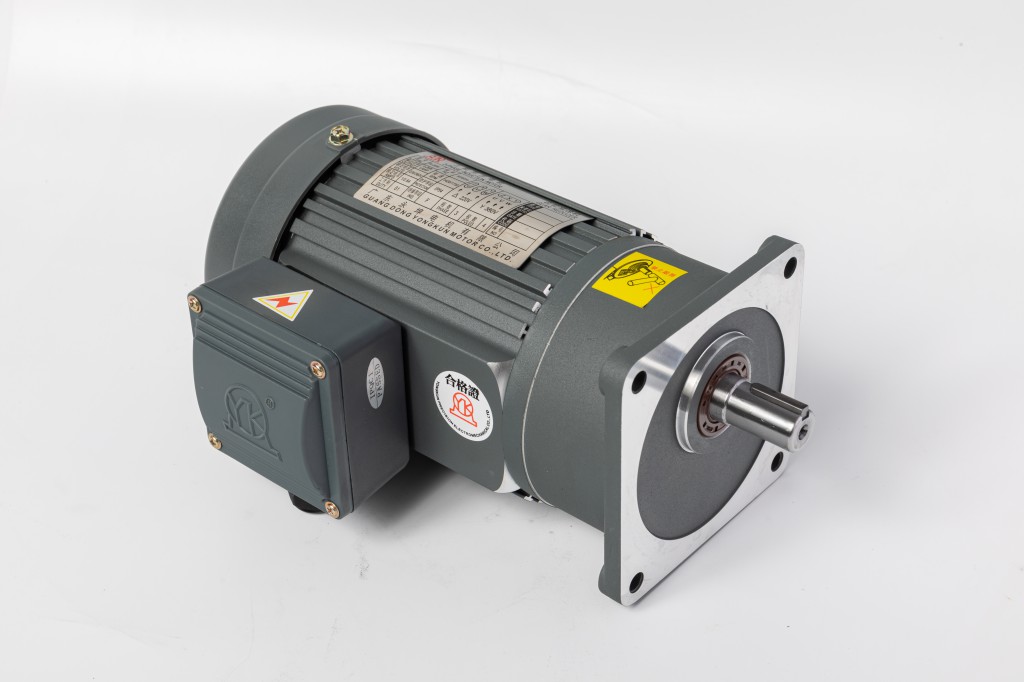
Gear reducers are mainly divided into two categories: parallel axis gear reducers and vertical axis gear reducers. The input shaft and output shaft of a parallel axis gear reducer are arranged in parallel, suitable for situations with loose space requirements.
The input shaft and output shaft of the vertical axis gear reducer are arranged vertically, suitable for situations with limited length. Gear reducers have a wide range of applications in industrial production. In lifting machinery, gear reducers can provide sufficient torque to smoothly lift lifting objects. In metallurgical equipment, gear reducers are commonly used in rolling mills, continuous casting machines, and other equipment to control the production line speed and ensure product quality through deceleration transmission. In addition, gear reducers are widely used in industries such as conveying machinery, pulp making machinery, textile machinery, etc.
Although gear reducers have many advantages, they also have some disadvantages. For example, due to the friction generated by the meshing of gears, it can cause noise and heat generation. Meanwhile, the transmission accuracy of gear reducers is relatively low, which can cause certain transmission errors. Therefore, in the application process, attention should be paid to reducing noise and heat, as well as conducting appropriate maintenance and upkeep.
In short, gear reducers, as a common type of reduction machinery, play an important role in industrial production. It transmits power through the meshing of gears, achieving a decrease in speed and an increase in torque. Gear reducers have the advantages of simple structure, high transmission efficiency, and strong load-bearing capacity, and are widely used in multiple industries. Understanding the working principle and characteristics of gear reducers is of great significance for the correct selection and use of reducers. When using a gear reducer, attention should be paid to reducing noise and heat, and reasonable maintenance and upkeep should be carried out to ensure the normal operation and service life of the reducer.
2. Introduction to planetary gearbox
A planetary gearbox is a type of gearbox that uses the principle of planetary transmission, consisting of a sun gear, planetary gears, and internal gears. Planetary reducers have the characteristics of compact structure and high torque output, making them suitable for applications that require high volume and torque. Planetary reducers are widely used in fields such as machine tools and industrial automation equipment.
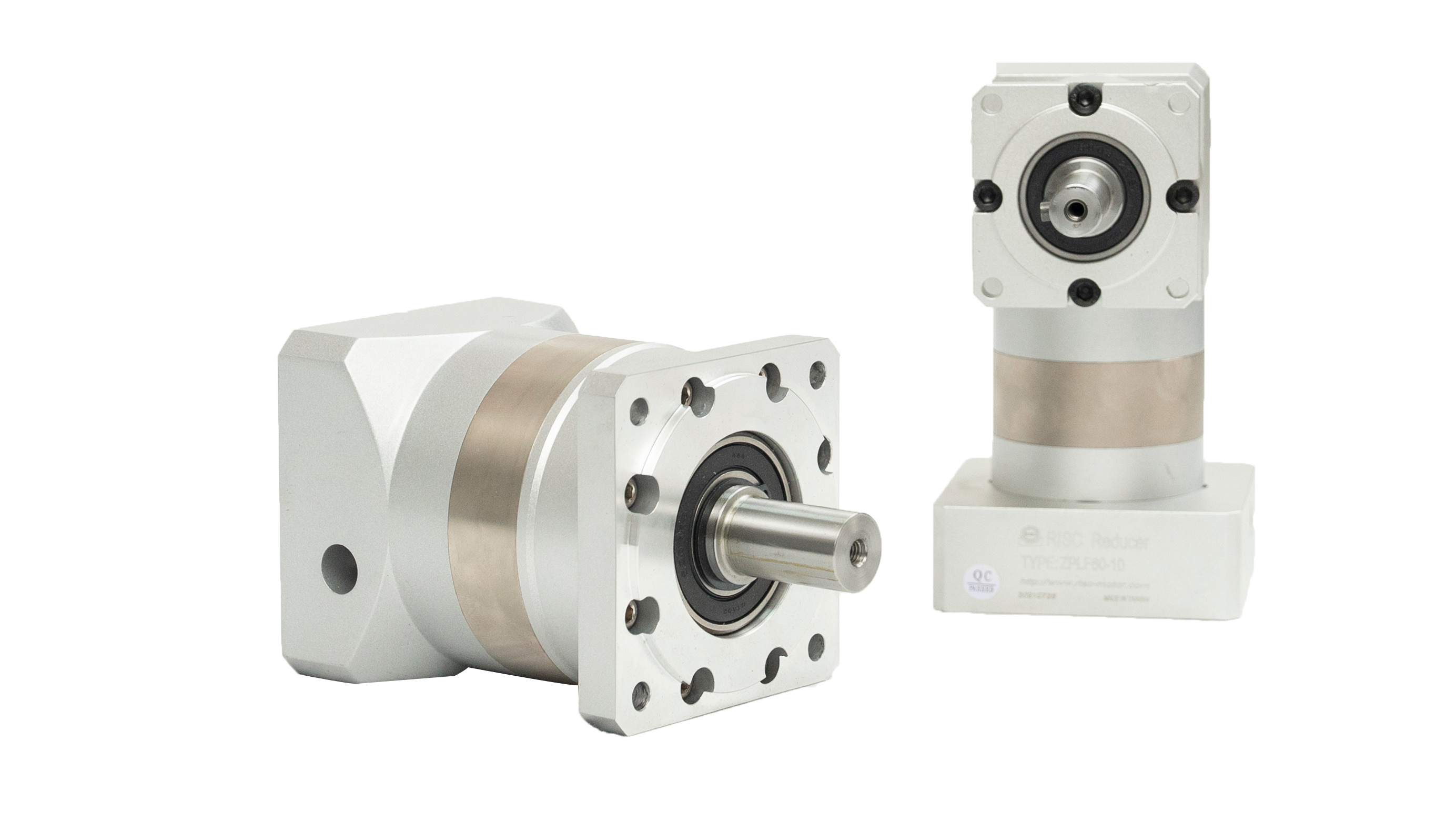
The working principle of a planetary gearbox is to achieve transmission between the input shaft and the output shaft by meshing the planetary gear with the sun gear, causing the planetary gear to rotate around the internal gear. Due to the star shaped arrangement of multiple rotation axes of the planetary gear relative to the central axis, it is named a planetary gearbox. Planetary reducers have high torque output and high transmission efficiency, and can provide large output torque in relatively small volumes, so they are widely used.
There are mainly two types of planetary gearboxes: single-stage and multi-stage structures. A single-stage planetary gearbox generally consists of a sun gear, multiple planetary gears, and an internal gear. The output shaft is directly connected to the internal gear, and torque output is achieved through the rotation of the planetary gears. The multi-stage planetary gearbox adds multiple stages to the single-stage planetary gearbox, each consisting of a sun gear, planetary gear, and internal gear, forming a cascade structure that can further reduce the speed of the output shaft and increase the output torque.
In summary, planetary gearboxes, as a type of gearbox that adopts the principle of planetary transmission, have the characteristics of compact structure and high torque output. Planetary reducers are widely used in fields such as machine tools and industrial automation equipment, achieving precise motion control through reduction transmission. Planetary reducers have the advantages of small size, high transmission efficiency, and good overlap ratio, but it is necessary to pay attention to lubrication, avoid overloading and overspeed during use. The correct selection and use of planetary gearboxes are of great significance for improving work efficiency and system performance.
Related News