
Introduction to bearings for deceleration motors
Release Time:
2025-04-19
What is a gearbox? Although it is low-key, it has long been integrated into daily life, from ships, cars, robots in transportation to common household appliances and clocks in daily life. As long as there is a need for deceleration, its presence is inevitable. To ensure the normal operation of the gearbox, it is necessary to talk about the parts responsible for supporting it
Introduction to bearings for deceleration motors
What is a gearbox? Although it is low-key, it has long been integrated into daily life, from ships, cars, robots in transportation to common household appliances and clocks in daily life. As long as there is a need for deceleration, its presence is inevitable. To ensure the normal operation of the gearbox, it is necessary to talk about the parts responsible for supporting it
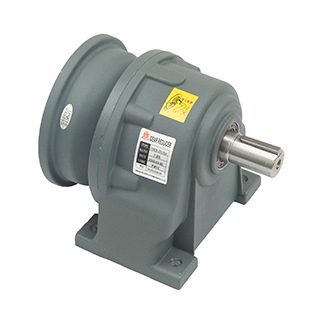
A reducer, also known as a gearbox, is a transmission component composed of multiple gears. It plays a role in matching speed and transmitting torque between the prime mover and the working machine or actuator, and can achieve the function of reducing speed and increasing torque. Compared to transmission methods such as belt, chain, hydraulic, and pneumatic, gear transmission has the characteristics of precision, efficiency, safety, reliability, and superior cost-effectiveness.
Bearings are the components responsible for supporting the relative rotation axis in reducers. It is precisely because of the presence of bearings that the gearbox can operate and work normally. Different types of reducers use different types of bearings. Choosing the appropriate bearing according to specific working conditions and load requirements can improve the operating efficiency and service life of the reducer.
Spherical roller bearings are suitable for working conditions that can withstand high radial and axial loads, as well as vibration and impact loads. They are commonly used in heavy-duty industrial reducers, vibrating screens, crushers, and other equipment.
Non neutralization and deviation: Due to the outer spherical surface of the outer ring of the self-aligning roller bearing, a certain range of axial and angular deviations can be allowed.
Self centering ability: Spherical roller bearings have good self centering ability, which can automatically adjust the relative position of the shaft and bearing seat to reduce stress and friction on the shaft, providing better performance and service life.
High bearing capacity: increases the fitting rate between the roller and the raceway, increases the effective contact length between the roller and the raceway in the axial direction, and improves the bearing capacity.
Good sealing performance: Equipped with sealing rings or sealing devices, it can prevent dust, moisture, and other pollutants from entering the bearing, extending its service life.
Low friction resistance: Reasonable matching of outer race raceway, inner race raceway, and roller roughness reduces friction resistance, which is beneficial for the high speed and low temperature rise of the bearing.
Full cylindrical roller bearing is a specially designed bearing used in special industrial reducers such as planetary gearboxes in construction machinery. It does not have a cage and has more rollers than traditional bearings, allowing the bearing to withstand greater radial loads.
High precision: High machining accuracy, dimensional accuracy, and rotational accuracy can reach P5 level.
High fatigue life: By using a special heat treatment method, the fatigue life of the bearing is improved.
High load-bearing capacity: The bearing structure is compact, with a large rolling area, saving installation space, and can resist significant deformation and vibration. The bearing has a high load-bearing capacity.
Related News