
You have a selection guide for planetary gearboxes, please check it out
Release Time:
2025-04-19
As a key transmission device, planetary gearbox is a crucial component in many mechanical systems, whether it is the efficient operation of automated production lines, the precise movements of industrial robots, or the stable operation of new energy equipment
You have a selection guide for planetary gearboxes, please check it out
As a key transmission device, planetary gearbox is a crucial component in many mechanical systems, whether it is the efficient operation of automated production lines, the precise movements of industrial robots, or the stable operation of new energy equipment
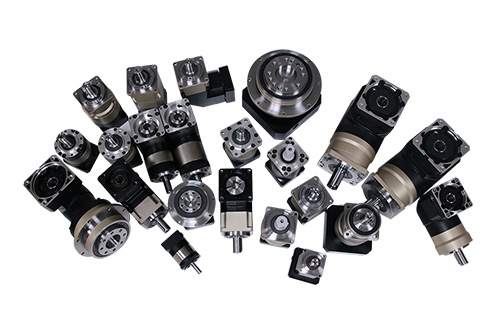
How to choose the one that suits your needs when facing the wide variety of planetary gearbox products on the market? Today, let's start this planetary gearbox selection guide together.
The selection of planetary gearboxes is not without rules and requires comprehensive consideration of multiple key factors.
1. Reduction ratio:
It is directly related to the proportional relationship between the output speed and input speed of the gearbox. For example, on an automated assembly line, different processes have precise requirements for the speed of material transfer. If the speed of the front-end motor is high and a certain link requires a low and stable speed to ensure the machining accuracy or assembly quality of the product, it is necessary to choose a planetary reducer according to the required precise reduction ratio. By setting a reasonable reduction ratio, the equipment can achieve optimal operational efficiency and stability while meeting the production process requirements.
2. Motor power:
The motor power is also a crucial factor that cannot be ignored. For high-power industrial equipment, such as the lifting mechanism of large cranes, the motor needs to output a large torque to drive heavy loads. At this point, it is necessary to choose a planetary gearbox that can match high-power motors to ensure that the gearbox has sufficient strength and torque carrying capacity, and to avoid faults or damage under high load operation. On the contrary, for some small precision instruments and equipment, such as small mixing devices in laboratories, the motor power is small. Choosing a low-power planetary reducer that matches them can not only meet the transmission needs of the equipment, but also avoid resource waste and cost increase.
3. Accuracy level:
The accuracy level of the reducer is very important in many precision application scenarios. Taking CNC machine tools as an example, even small displacements of cutting tools can affect the quality of products during high-precision machining of components. The high precision of planetary reducers can ensure that the power output by the motor is accurately transmitted to the cutting tool, achieving precise motion control at the micrometer or even nanometer level, thereby machining parts that meet high-precision requirements. In some ordinary industrial transmissions with relatively low precision requirements, such as simple material conveying equipment, a reducer with moderate precision can be selected according to the actual situation to balance performance and cost.
4. Operating environment:
Considering the operating environment of the equipment is also crucial. In harsh environments, such as mining sites, there is a large amount of dust, moisture, and vibration present. At this point, it is necessary to choose a planetary gearbox with good sealing performance and seismic resistance to prevent dust and moisture from entering the gearbox and damaging key components such as gears and bearings, ensuring that the gearbox can operate stably and reliably under harsh conditions. In relatively clean and stable indoor environments, such as electronic manufacturing workshops, the environmental adaptability requirements for reducers are relatively low, and more attention can be paid to other factors such as performance and cost.
Related News