
The leading gear reducer has reached a historical turning point
Release Time:
2025-04-16
A reducer, also known as a gearbox, is a device that reduces the speed and increases the torque between the prime mover and the working machine or actuator. It achieves deceleration and transmits greater torque by meshing the small gear on the input shaft with the large gear on the output shaft. This principle may seem simple, but it plays a crucial role in the field of mechanical transmission.
The leading gear reducer has reached a historical turning point
A reducer, also known as a gearbox, is a device that reduces the speed and increases the torque between the prime mover and the working machine or actuator. It achieves deceleration and transmits greater torque by meshing the small gear on the input shaft with the large gear on the output shaft. This principle may seem simple, but it plays a crucial role in the field of mechanical transmission.
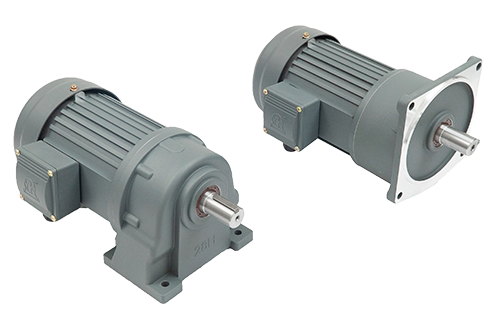
In the field of industrial robots, the importance of reducers is particularly prominent. It is the core component of robot joints, which can convert the rotational motion of the motor into the required speed and torque, while significantly reducing errors in motion and improving the operational accuracy of the robot. In addition, the reducer can increase the output torque of the motor, enabling the robot to perform heavier load tasks. In scenarios that require high precision and high load, such as automated production lines in automotive manufacturing, aerospace, and other fields, reducers are an indispensable key component.
In addition to industrial robots, reducers also play an important role in various fields such as transportation, energy mining, and national defense technology. In the transmission system of new energy vehicles, reducers can optimize power transmission and improve the vehicle's driving performance. In the field of wind power generation, reducers are key equipment that connect wind turbines to the grid, ensuring stable output of electrical energy.
industry prospect
With the increasing popularity of intelligent and digital manufacturing technology, as well as the continuous expansion of emerging application fields, the reducer industry is ushering in a broader development space.
On the one hand, the global gearbox market is showing a steady expansion trend. According to relevant data, the global reducer market has gradually grown at a compound annual growth rate of about 4.8% since 2020, and is expected to reach $176.6 billion by 2026. Among them, the Chinese market has maintained strong growth momentum for three consecutive years, demonstrating enormous market potential.
On the other hand, with the continuous advancement of technology, the performance of reducers is also constantly improving. The application of new materials, the introduction of high-precision machining technology, and the promotion of integrated design have all led to smaller volume, lighter weight, higher precision, and stronger stability of reducers. These performance improvements not only meet the market's demand for high-performance reducers, but also lay a solid foundation for the future development of the reducer industry.
In addition, with the continuous development of emerging technologies such as artificial intelligence and the Internet of Things, there is an increasing demand for high-precision and high reliability reducers. In the fields of intelligent manufacturing, CNC machine tools, semiconductor equipment manufacturing, etc., reducers will play a more important role. At the same time, higher requirements have been put forward for the performance of reducers in end environments such as aerospace and deep-sea exploration
Related News