
What is the difference between hyperbolic gear reducer and worm gear reducer?
Release Time:
2025-04-12
What is the difference between hyperbolic gear reducer and worm gear reducer? To read the following content carefully, the literal meaning is easy to understand. Hyperboloid is for gear reducers, and worm gear is for worm gear reducers.
What is the difference between hyperbolic gear reducer and worm gear reducer?
What is the difference between hyperbolic gear reducer and worm gear reducer? To read the following content carefully, the literal meaning is easy to understand. Hyperboloid is for gear reducers, and worm gear is for worm gear reducers.
Hyperbolic reducer is a small type of orthogonal shaft gear reducer. The driving gear shaft is perpendicular to the driven gear shaft and does not intersect. Hyperbolic gear reducer is a transmission between bevel gear (i.e. bevel gear) and worm gear transmission. The noise of hyperbolic gear reducer is lower than that of umbrella gear reducer, and the efficiency is much higher than that of worm gear reducer. Therefore, for equipment manufacturers who want to improve the efficiency of automated transmission, purchasing a hyperbolic gear reducer is a good choice.
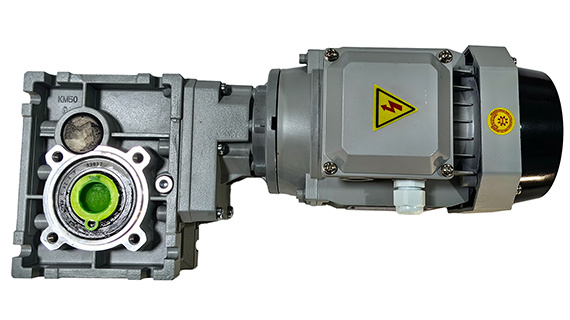
Characteristics of hyperbolic reducer:
1、 The noise of worm gear reducer is relatively low and the efficiency of umbrella gear reducer is high. The design of hypoid gear reducer adopts all its advantages, making its noise lower and efficiency higher.
2、 Compared to worm gears, orthogonal shaft reducers have the same output power, smaller size, and lighter weight.
3、 Compared with the worm gear gearbox, the worm gear of the worm gear reducer is made of brass and generally does not undergo heat treatment, making it relatively soft.
4、 There are various installation forms that can be equipped with multiple motors. Especially suitable for places with low power and high installation space.
5、 More convenient installation: The orthogonal axis reducer is installed on a square mounting surface, and the four mounting bolt holes are also arranged in a square shape. Even if the installation hole is changed from horizontal installation to vertical installation, there is no need to change the position of the installation hole. The output shaft of the orthogonal axis gear reducer can provide customers with multiple options, such as hollow shaft, left (right) output shaft, double output shaft, etc.
6、 The orthogonal shaft reducer adopts grease lubrication and integrated box design, which has good sealing performance and can be used in various fields including food processing machines. Due to the use of grease lubrication method, maintenance free for life
Transmission principle
Hyperbolic reducer: Utilizing the meshing transmission of hyperbolic gears, the axes of the driving gear and the driven gear are non parallel and non intersecting, and power is transmitted through a spiral bevel gear pair with a hyperbolic tooth surface.
Worm gear reducer: Power is transmitted through the meshing of the worm gear and the worm wheel. The axis of the worm gear is usually perpendicular to the axis of the worm wheel, and the worm gear is like a helical rod, while the worm wheel is like a helical gear.
Structural characteristics
Hyperbolic reducer: compact structure, relatively small volume, and light weight. Due to the special shape and transmission mode of hyperbolic gears, they can achieve a larger transmission ratio in a smaller space.
Worm gear reducer: The structure is relatively simple, usually composed of main components such as worm gear, worm wheel, and housing. But generally speaking, its volume may be larger than that of the double curved surface reducer under the same transmission ratio.
transmission efficiency
Hyperbolic reducer: The transmission efficiency is relatively high, generally between 0.85-0.95. This is because the meshing conditions of hyperbolic gears are good, and the sliding friction between tooth surfaces is small, which can effectively reduce energy loss.
Worm gear reducer: The transmission efficiency is relatively low, usually between 0.7-0.85, especially in the case of large transmission ratios. This is because there is significant sliding friction between the tooth surfaces when the worm gear meshes with the worm wheel, resulting in significant energy loss.
bearing capacity
Hyperbolic reducer: With strong load-bearing capacity, it can withstand large torque and load. The tooth profile design and manufacturing process of hyperbolic gears result in high tooth contact strength and root bending strength, making them suitable for heavy-duty transmission.
Worm gear reducer: Under the same power transmission, the load-bearing capacity of worm gear reducer is generally not as good as that of hyperbolic reducer. However, through reasonable design and material selection, some medium load work requirements can also be met.
Application scenarios
Hyperbolic reducer: widely used in fields such as automobiles, ships, aerospace, and some industrial equipment that require high transmission efficiency and load-bearing capacity, such as metallurgy, mining, lifting and transportation.
Worm gear reducer: commonly used in applications that require high transmission stability, large transmission ratios, and limited space, such as elevators, stage machinery, textile machinery, food machinery, etc. Meanwhile, in some mechanisms that require self-locking function, worm gear reducers have also been widely used.
Related News