
What are the manufacturing difficulties of RV reducers compared to harmonic reducers?
Release Time:
2025-04-11
Harmonic reducer and RV reducer are both derived types of planetary transmission with few tooth differences. In terms of achieving less tooth difference, harmonic reducers use flexible deformation, while RV reducers use cycloidal pinwheels. The purpose of reducing tooth difference is to improve the reduction ratio, and the harmonic and cycloid methods not only improve the reduction ratio, but also increase the number of meshing teeth (compared to involute with less tooth difference), thereby improving the load-bearing capacity and ultimately demonstrating good adaptability to the product requirements of robots (mainly robotic arms), namely high speed ratio, large load capacity, and high precision. Therefore, they are widely used in the field of robotics.
What are the manufacturing difficulties of RV reducers compared to harmonic reducers?
Harmonic reducer and RV reducer are both derived types of planetary transmission with few tooth differences. In terms of achieving less tooth difference, harmonic reducers use flexible deformation, while RV reducers use cycloidal pinwheels. The purpose of reducing tooth difference is to improve the reduction ratio, and the harmonic and cycloid methods not only improve the reduction ratio, but also increase the number of meshing teeth (compared to involute with less tooth difference), thereby improving the load-bearing capacity and ultimately demonstrating good adaptability to the product requirements of robots (mainly robotic arms), namely high speed ratio, large load capacity, and high precision. Therefore, they are widely used in the field of robotics.
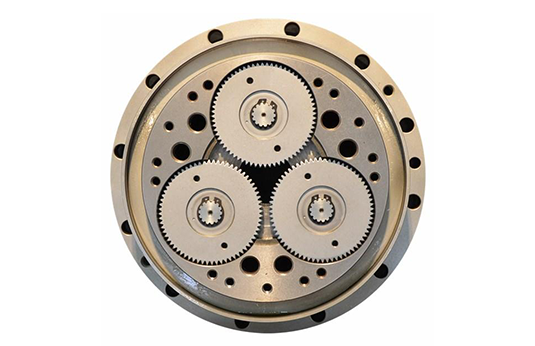
From a simple perspective of appearance or principle, both types of reducers can be produced using 3D printing technology, but this has no practical significance because reducers that only have the principle appearance without considering performance cannot be effective in practice.
The important performance indicators of these two types of reducers mainly include basic indicators such as accuracy and load, as well as more detailed aspects such as efficiency, speed, lifespan, and stiffness. In general applications, accuracy and load are intuitively perceptible, while in reflecting the gap between domestic and foreign products, lifespan is an important indicator.
Complex transmission structure: RV reducer is a closed differential gear system composed of the front stage of planetary gear reducer and the rear stage of cycloidal pinwheel reducer. This complex structural design requires precise calculation and planning to ensure the coordinated work between various components. For example, the arrangement of planetary gears, the design of crankshafts, and the meshing method between cycloid gears and needle teeth all need to meet strict mechanical and kinematic requirements, which increases the difficulty and complexity of the design.
High precision component coordination: The RV reducer has numerous internal components, and the precision requirements for the coordination between each component are high. For example, the meshing clearance between the cycloidal gear and the needle teeth, as well as the precision of the fit between the planetary gear and the sun gear, all directly affect the transmission accuracy, efficiency, and lifespan of the reducer. In order to achieve these high-precision fittings, it is necessary to fully consider factors such as dimensional tolerances and geometric tolerances of the parts during the design phase, and ensure them through precise machining and assembly processes.
High strength and wear resistance: RV reducers need to withstand large loads and torques, so high material strength and wear resistance are required. For example, gear materials need to have high hardness, strength, and toughness to resist long-term wear and fatigue damage. At the same time, the heat treatment process of materials is also crucial, and it is necessary to improve the performance of materials through appropriate heat treatment methods, which puts higher demands on the selection of materials and the control of heat treatment processes.
For harmonic reducers, due to their use of flexible deformation to achieve transmission, it is relatively easy to reach a passing level in some performance indicators to a certain extent. But to further improve and achieve excellence, continuous efforts are needed in materials, manufacturing processes, and other aspects, such as improving the fatigue life of flexible wheels and reducing transmission errors.
For RV reducers, the characteristics of rigid transmission and over constrained structure do greatly increase the difficulty of design and process. Rigid transmission requires high precision and strength of each component, and over constrained structures also require high assembly accuracy. Any problem in any link may affect the performance of the entire reducer. Therefore, achieving a passing grade is indeed quite difficult, requiring strict control and continuous optimization in multiple aspects such as design, material selection, processing technology, and assembly technology to meet its requirements for high precision, high rigidity, high load-bearing capacity, and other performance.
However, it should be pointed out that "easy" and "difficult" are relative concepts, and with the continuous progress and innovation of technology, new breakthroughs are also being made in the research and manufacturing of harmonic reducers and RV reducers.
Related News