
The strategy to overcome servo motor jitter, take a look!
Release Time:
2025-04-10
In the field of industrial automation and precision control, servo motor vibration has always been a headache for engineers. It not only affects the accuracy and performance of the equipment, but may also lead to premature wear and even cause production accidents. Today, let's delve into the causes, solutions, and preventive measures of servo motor vibration together, to help you easily tackle this tricky problem!
The strategy to overcome servo motor jitter, take a look!
In the field of industrial automation and precision control, servo motor vibration has always been a headache for engineers. It not only affects the accuracy and performance of the equipment, but may also lead to premature wear and even cause production accidents. Today, let's delve into the causes, solutions, and preventive measures of servo motor vibration together, to help you easily tackle this tricky problem!
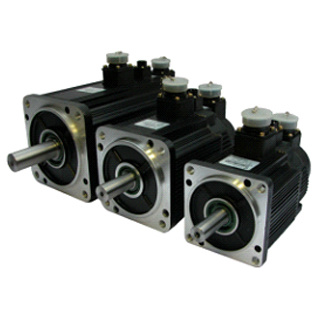
Analysis of servo motor vibration phenomenon
There are various forms of servo motor vibration, and the following are some common vibration phenomena:
Enable later oscillation
The motor starts oscillating back and forth after being enabled, which is usually caused by a mismatch between the control signal during the initial start-up phase of the system and the motor response.
Sudden oscillation during operation
The sudden oscillation of the motor during normal operation may be caused by external interference, unreasonable parameter settings, or mechanical structural problems.
Shake during start stop operation
The motor oscillates at the moment of starting or stopping, which is due to the mismatch between the rapid changes in control signals during the start stop phase and the dynamic response characteristics of the motor.
Common causes and solutions
Improper adjustment of PID parameters
Symptoms: Various forms of shaking, especially when the load changes
Solution: Gradually adjust the P (proportional), I (integral), and D (derivative) parameters, starting with reducing the P value, and then fine tune I and D. If the drive supports it, the auto tuning function can be used, but it needs to be fine tuned based on the results
Inertia ratio mismatch
Symptom: Post activation oscillation
Solution: Increase the inertia ratio of the motor to improve system stability, but be careful not to slow down the response
The rigidity of the motor is too high
Symptom: Sudden oscillation during operation
Solution: Reduce the rigidity of the motor appropriately and lower the sensitivity of the system to external interference, but balance rigidity and positioning accuracy
Inappropriate position and velocity loop parameters
Symptom: Shake during start stop operation
Solution: Adjust the filtering time of the position loop and velocity loop, smooth the control signal, balance response speed and stability
mechanical resonance
Symptom: Severe vibrations occur at a specific speed or frequency
Solution: Use notch filters to eliminate vibrations at specific frequencies, reinforce mechanical structures, adjust operating speeds to avoid resonance frequencies
Feedback on equipment issues
Symptoms: Irregular shaking or inaccurate positioning
Solution: Check the encoder connection and signal quality, clean the encoder disk, and replace the feedback device if necessary
Power Problem
Symptoms: Random and irregular shaking
Solution: Check the stability of the power supply voltage, use a regulated power supply or UPS, and increase the filtering capacitor
Related News