
Transmission experts customize the 'just right' gearbox for you
Release Time:
2025-04-07
In today's rapidly iterating industrial equipment, standardized transmission products often struggle to match personalized scenario requirements - limited equipment space, special loads, and strict precision requirements... How to install a "just right" transmission heart for your equipment?
Transmission experts customize the 'just right' gearbox for you
In today's rapidly iterating industrial equipment, standardized transmission products often struggle to match personalized scenario requirements - limited equipment space, special loads, and strict precision requirements... How to install a "just right" transmission heart for your equipment?
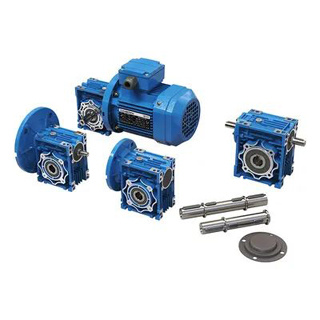
Why do we need 'non-standard customization'?
Compact space - requires a reducer with smaller volume and higher torque;
Special working conditions - high temperature resistance, corrosion resistance, low noise and other special requirements;
Ultra high precision - such as medical equipment and robot joints, the error needs to be controlled at the level of arcseconds.
Accurate requirement analysis: Transmission experts will have in-depth communication with customers to gain a detailed understanding of the operating conditions of the equipment, such as load characteristics (constant load, variable load, or impact load), operating speed requirements, working environment (temperature, humidity, dust, etc.), installation space, and expected service life. For example, in mining equipment, due to frequent impact loads and harsh working environments, reducers need to have wear resistance, impact resistance, and good sealing performance to prevent dust from entering and damaging components such as gears.
Optimized parameter design: Based on the results of demand analysis, transmission experts will accurately design the key parameters of the reducer. Including speed ratio, power, speed, torque, transmission efficiency, etc. For example, for a reducer that needs to drive a large conveyor belt, the appropriate speed ratio and torque should be determined based on factors such as the speed and load weight of the conveyor belt to ensure that the output of the motor can meet the operating requirements of the conveyor belt, while avoiding overloading or power waste of the reducer.
Appropriate structural selection: Different application scenarios require different types of reducers with different structural types. Common reducer structures include gear reducers, cycloidal pinwheel reducers, planetary reducers, etc. For example, planetary reducers have the advantages of small size, light weight, high transmission efficiency, and large load-bearing capacity, making them suitable for applications that require compact structure and high transmission accuracy, such as joint transmission in industrial robots; The cycloidal pinwheel reducer has the characteristics of high reduction ratio, smooth operation, and low noise, and is commonly used in equipment with high noise requirements, such as textile machinery.
High quality material selection: The material of the reducer directly affects its performance and service life. Transmission experts will select suitable materials based on the working environment and load requirements. Common materials include cast iron, steel, copper alloys, aluminum alloys, etc. In high-temperature environments, high-temperature resistant alloy steel may be chosen; In environments with corrosion risks, corrosion-resistant materials such as stainless steel or copper alloys are preferred. At the same time, for key transmission components such as gears, high-quality alloy steel will be used and subjected to heat treatment processes such as carburizing, quenching, and grinding to improve the hardness, strength, and wear resistance of the gears, ensuring the accuracy and reliability of the transmission.
Related News