
Analysis of Characteristics and Development Trends of Permanent Magnet Motors
Release Time:
2025-04-01
A permanent magnet motor is a type of motor that uses permanent magnets to generate a constant magnetic field. It has the advantages of high efficiency, high power density, and simple structure, and is widely used in industries, household appliances, new energy vehicles, wind power generation, and other fields. The following is a detailed analysis of its characteristics and development trends:
Analysis of Characteristics and Development Trends of Permanent Magnet Motors
A permanent magnet motor is a type of motor that uses permanent magnets to generate a constant magnetic field. It has the advantages of high efficiency, high power density, and simple structure, and is widely used in industries, household appliances, new energy vehicles, wind power generation, and other fields. The following is a detailed analysis of its characteristics and development trends:
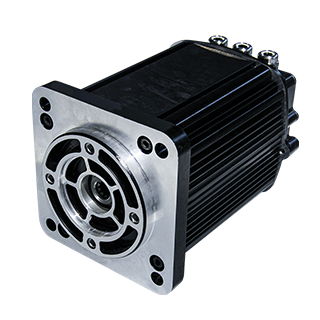
1、 The core characteristics of permanent magnet motors
1. High efficiency
The permanent magnet replaces the traditional electric excitation system of the motor, eliminating excitation losses (such as copper losses), and the efficiency is usually 5% to 15% higher than that of asynchronous motors.
High efficiency can still be maintained at low speeds, suitable for scenarios with frequent start stop or variable speed operation.
2. High power density
Permanent magnets have high magnetic field strength and are smaller in size and lighter in weight under the same power, making them suitable for space limited applications such as electric vehicles and drones.
3. Excellent dynamic performance
Fast response speed, high torque inertia ratio, suitable for high-precision control scenarios such as robots and servo systems.
4. Low maintenance cost
The structure is simple, without brushes or slip rings (such as permanent magnet synchronous motors), reducing mechanical wear and failure rates.
5. Energy conservation and environmental protection
High efficiency can reduce energy consumption and meet the needs of low-carbon economy; Rare earth permanent magnet materials can be recycled and reused.
6. Disadvantages and challenges
High cost: relying on rare earth materials (such as neodymium iron boron), prices are limited by resources.
High temperature demagnetization risk: Permanent magnets may demagnetize in high temperature environments, and the heat dissipation design needs to be optimized.
Complex control: requires the use of high-performance controllers (such as vector control) to leverage their advantages.
2、 The Development Trend of Permanent Magnet Motors
1. Material innovation
Rare earth free permanent magnet materials: Developing non rare earth permanent magnet materials such as ferrite and aluminum nickel cobalt to reduce dependence on rare earth resources.
High temperature permanent magnet materials: improve the temperature resistance of materials such as samarium cobalt (SmCo) and adapt to high temperature environments (such as aerospace).
Composite magnetic materials: Combining soft magnetic materials and permanent magnets to optimize magnetic field distribution and performance.
2. Expansion of application areas
New energy vehicles: Drive motors are developing towards higher power density and integration (such as the integration of motors and reducers).
Wind power generation: Direct drive permanent magnet wind turbines replace traditional gearbox structures to improve reliability.
Industrial energy conservation: replacing traditional asynchronous motors for high energy consuming equipment such as compressors and pumps.
Micro application: The demand for micro permanent magnet motors is increasing in fields such as medical devices and consumer electronics.
3. Intelligence and integration
Intelligent control: Combining AI algorithms to optimize motor operation status (such as predictive maintenance, adaptive speed regulation).
Power electronics integration: The motor is highly integrated with the controller and inverter, reducing energy loss and system volume.
Multi physics field collaborative design: Optimize the comprehensive performance of the motor through electromagnetic thermal mechanical coupling simulation.
4. Green manufacturing and recycling technology
Low carbon process: adopting environmentally friendly processes to reduce pollution in the production of permanent magnet materials.
Magnet recycling technology: Developing efficient rare earth recycling technology to alleviate resource shortages.
5. Anti demagnetization and reliability improvement
Optimize magnetic circuit design (such as Halbach array) and heat dissipation structure to improve demagnetization resistance.
Real time monitoring of motor status through fault diagnosis technology to extend its service life.
6. Standardization and modular design
Promote the standardization of international standards and reduce research and production costs.
Modular design enables rapid customization to meet diverse needs.
3、 Summary
Permanent magnet motors, with their advantages of high efficiency, compactness, and environmental friendliness, have become the mainstream direction of future motor technology. With the advancement of materials science, power electronics, and intelligent control technology, its application scenarios will continue to expand, while cost reduction and reliability improvement will accelerate the replacement of traditional motors. The core challenge for future development lies in balancing performance, cost, and resource sustainability, and promoting the evolution of permanent magnet motors towards higher efficiency, intelligence, and sustainability.
Related News