
Guidelines for terminology and parameter selection of stepper motors.
Release Time:
2025-03-24
As a key execution component, stepper motors are everywhere, from building exquisite models layer by layer in 3D printers, to showcasing delicate craftsmanship in CNC engraving machines, to creating a magical atmosphere through dynamic changes in stage lighting equipment. Today, let's delve into the important terms and parameters related to stepper motors and master the key points of their selection.
Guidelines for terminology and parameter selection of stepper motors.
As a key execution component, stepper motors are everywhere, from building exquisite models layer by layer in 3D printers, to showcasing delicate craftsmanship in CNC engraving machines, to creating a magical atmosphere through dynamic changes in stage lighting equipment. Today, let's delve into the important terms and parameters related to stepper motors and master the key points of their selection.
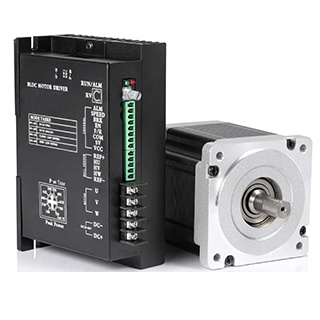
1. Step angle: Step angle is a core term for stepper motors. It refers to the angle at which the rotor rotates for each pulse signal received by the motor. For example, the common 1.8 ° step angle stepper motor means that each pulse will cause the motor to rotate 1.8 degrees. A smaller step angle can achieve more precise position control, such as in precision instruments that require precise adjustment of the pointer or lens position. A stepper motor with a smaller step angle can meet this high-precision requirement.
2. Phase number: Phase number is also one of the important parameters, commonly including two-phase, three-phase, and five equal. The number of phases determines the winding structure and driving mode of the motor, and motors with different numbers of phases have different operating characteristics. Generally speaking, the more phases there are, the better the smoothness of motor operation, and the output torque is relatively more uniform. In some situations that require large and stable torque output, such as joint drive of large robotic arms on industrial automation production lines, multiphase stepper motors are more suitable.
3. Resolution and step angle: Resolution and step angle are closely related, representing the small positional changes that the motor can resolve, usually measured in steps per revolution. A higher resolution means that the motor can achieve more precise position control, which is crucial in precision demanding fields such as wafer transfer positioning systems in semiconductor manufacturing equipment, where even small positional deviations can lead to product quality issues.
4. Load torque: When selecting, load torque is a key consideration factor. It is necessary to ensure that the output torque of the motor can overcome the resistance torque of the load and leave a certain margin to ensure reliable operation. For example, in an automatic door and window control system, the motor needs to overcome the frictional and inertial forces of the doors and windows. If the selection is improper, the motor may not be able to drive the doors and windows to open or close normally, and may even damage the motor.
5. Speed: Speed requirements cannot be ignored either. Different application scenarios have different requirements for the speed of the motor. For high-speed labeling machines, it is required that the stepper motor can quickly and stably drive the label pasting mechanism to meet the speed requirements of efficient production; In some situations where higher speed accuracy is required, such as engraving machines, it is necessary to choose an appropriate speed range while ensuring accuracy.
Related News