
Analysis and Application of S Series Gear Reducer
Release Time:
2025-03-14
The S series gear reducer, as an important type, occupies an important position in the market with its unique performance advantages and application characteristics.
Analysis and Application of S Series Gear Reducer
Gear reducer, as a common mechanical transmission device, achieves speed reduction and torque increase through the meshing between gears. In industrial production, gear reducers are widely used in various applications that require deceleration and torque increase, such as mechanical equipment, automation equipment, mining, metallurgy, petroleum, chemical and other fields. The S series gear reducer, as an important type, occupies an important position in the market with its unique performance advantages and application characteristics.
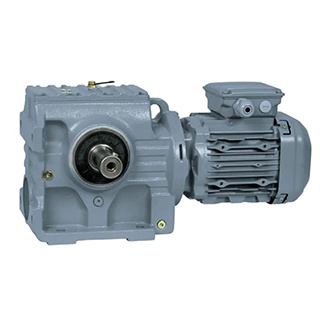
Structural composition
The S series gear reducer is mainly composed of a housing, input shaft, output shaft, gear system, bearings, sealing device, and lubrication system.
Shell: usually made of cast iron or aluminum alloy material, with high strength and corrosion resistance, used to protect internal components and provide good sealing performance.
Input shaft: connected to a motor or other power source, transmitting power to the gearbox. The input shaft is usually made of high-quality alloy steel to ensure its strength and wear resistance.
Output shaft: Used to output power after deceleration, its speed and torque are determined by the reduction ratio of the gearbox. The design of the output shaft usually takes into account the connection method and installation space with the load device.
Gear system: S series gear reducers typically use helical gears or spiral bevel gears for efficient reduction and torque increase. The accuracy and meshing quality of gears have a significant impact on the performance of reducers.
Bearings: used to support input and output shafts, reducing friction and wear. The quality and type of bearings have a significant impact on the operational stability and lifespan of the gearbox.
Sealing device: used to prevent lubricating oil leakage and the entry of external dust and impurities. Good sealing performance can ensure the long-term stable operation of the gearbox.
Lubrication system: used to provide necessary lubrication for the gear system, reducing friction and wear. The lubrication system usually includes parts such as oil tank, oil pump, oil pipe, and oil filter.
The working principle of the S series gear reducer is based on the meshing principle of gears. When the input shaft rotates, the speed of the output shaft will decrease and the torque will increase through the transmission of the gear system. The reduction ratio of a gearbox is usually determined by the gear ratio. For example, if the number of gear teeth on the input shaft is Z1 and the number of gear teeth on the output shaft is Z2, then the reduction ratio is Z2/Z1. By changing the gear ratio, different reduction ratios can be achieved to meet the needs of different working conditions.
Selection principle
When selecting, comprehensive consideration should be given to the actual working conditions and requirements. Here are some main selection principles:
Load characteristics: Select the appropriate reducer model and specifications based on the load characteristics (such as constant torque, variable torque, etc.).
Required torque: Select the appropriate reduction ratio and output shaft specification for the gearbox based on the required torque.
Speed requirements: Select the appropriate input shaft speed and output shaft speed of the reducer according to the speed requirements.
Installation space: Choose the appropriate reducer structure and size according to the size of the installation space.
Usage environment: Choose the appropriate reducer material and sealing performance based on the usage environment (such as temperature, humidity, corrosiveness, etc.).
Related News