
Reasons and maintenance of servo motor position error
Release Time:
2025-03-13
As a key component in modern industrial control, the position accuracy of servo motors is crucial for many automation systems. However, in practical applications, servo motors often suffer from position errors, which not only affect the performance of the system but may also lead to a decrease in production quality. This article will delve into the causes of servo motor position errors and propose corresponding maintenance measures to help readers better understand and solve this problem.
Reasons and maintenance of servo motor position error
As a key component in modern industrial control, the position accuracy of servo motors is crucial for many automation systems. However, in practical applications, servo motors often suffer from position errors, which not only affect the performance of the system but may also lead to a decrease in production quality. This article will delve into the causes of servo motor position errors and propose corresponding maintenance measures to help readers better understand and solve this problem.
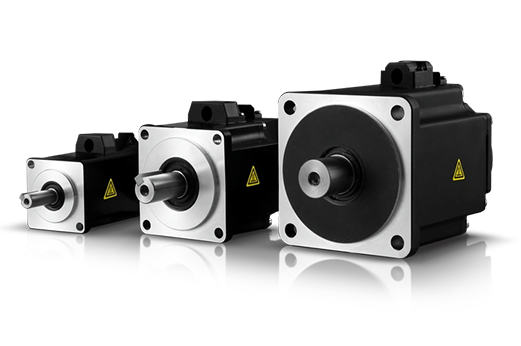
1、 Mechanical structural factors
The mechanical structure of servo motors is an important source of position error. The wear and looseness of mechanical components are one of the main reasons for the decrease in positioning accuracy. Long term use and poor maintenance habits can lead to wear and looseness of mechanical components such as bearings, gears, and drive belts. These changes will directly affect the motion accuracy of the motor, making it difficult to accurately reach the predetermined position.
Maintenance measures:
◆ Regular inspection and maintenance: Establish a regular inspection mechanism to check the wear of mechanical components and replace severely worn parts in a timely manner.
◆ Tighten loose parts: For loose parts, use appropriate tools to tighten them to ensure the stability of the mechanical structure.
◆ Increase lubrication: Add an appropriate amount of lubricant to the transmission system to reduce friction and wear, and improve motion accuracy.
Mechanical vibration and resonance are also factors that affect positioning accuracy. When the motor is running at high speed, some parts of the mechanical structure may resonate, leading to an increase in position error. This resonance phenomenon is particularly evident when the load is large or the system stiffness is low.
Maintenance measures:
◆ Increase structural stiffness: By improving the design of mechanical structures, increase their stiffness to reduce the occurrence of resonance phenomena.
◆ Optimize load distribution: Allocate loads reasonably, avoid excessive stress in a certain part, and reduce vibration.
◆ Use shock absorbers: Install shock absorbers in mechanical structures to absorb and disperse vibration energy, reducing the impact of resonance.
Mechanical eccentricity and offset can also cause positioning errors. This may be due to errors in the manufacturing or installation process of the components. When the motor is running, these eccentricity or offset phenomena will be amplified, thereby affecting the positioning accuracy.
Maintenance measures:
◆ Accurately adjust the position of components: Use high-precision measuring tools to precisely adjust the position of components to ensure that they are in the correct position.
◆ Use high-precision positioning components: Select high-precision positioning components and bearings to improve the accuracy of mechanical structures.
◆ Regular calibration: Regularly calibrate the motor to ensure that its motion trajectory is consistent with the theoretical value.
2、 Control system factors
The control system of servo motors is also an important factor in position error. The accuracy and real-time performance of control algorithms directly affect the positioning accuracy of motors. If the control algorithm is inaccurate or lacks real-time performance, the motion trajectory of the motor will deviate from the theoretical value, resulting in position errors.
Maintenance measures:
◆ Optimization control algorithm: Select the appropriate control algorithm based on actual application requirements and optimize it. For example, when using a PID controller for position control, errors can be reduced by adjusting the P, I, and D parameters.
◆ Improve real-time control: High performance controllers and sensors are used to enhance the real-time performance of the control system, ensuring that the motor can accurately respond to control instructions.
◆ Use feedforward control: Combined with feedforward control, compensate the system in advance to reduce errors during dynamic processes.
The tuning parameters of the control system have a significant impact on the performance of servo motors. If the setting parameters are not reasonable, the positioning accuracy of the motor will be affected. The process of tuning parameters requires experimentation and adjustment to determine optimal parameters, in order to achieve better dynamic performance and positioning accuracy.
Maintenance measures:
◆ Parameter debugging: Use professional debugging tools to debug the tuning parameters of the control system and find the optimal parameter combination.
System simulation: During the debugging process, system simulation software can be used to simulate motor motion, in order to predict and evaluate performance under different parameters.
Continuous monitoring: During actual operation, continuously monitor system performance and adjust parameters in a timely manner to respond to environmental changes.
The accuracy of feedback signals is crucial for the positioning accuracy of servo motors. If the feedback signal is inaccurate, the motion trajectory of the motor will not accurately reflect the actual position, resulting in position errors.
Maintenance measures:
◆ Replace high-precision sensors: Choose high-resolution and high-precision sensors to improve the accuracy of feedback signals.
◆ Reduce transmission errors: Optimize the transmission path of sensor signals to reduce signal attenuation and interference during transmission.
◆ Improve signal processing accuracy: Adopt advanced signal processing algorithms and technologies to enhance the processing accuracy of feedback signals.
Related News