
Application and practical solutions of servo motors in industrial control and medical robots
Release Time:
2025-03-08
Servo motors, with their high precision, high response speed, and high reliability, have become indispensable core components in industrial and medical robots. This article will delve into the specific applications of servo motors in two major fields, and analyze their technical advantages and practical solutions based on actual cases.
Application and practical solutions of servo motors in industrial control and medical robots
Servo motors, with their high precision, high response speed, and high reliability, have become indispensable core components in industrial and medical robots. This article will delve into the specific applications of servo motors in two major fields, and analyze their technical advantages and practical solutions based on actual cases.
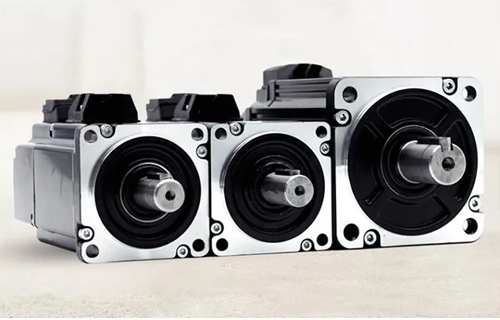
In the application scenario of robots, the control system of the robot will send specific control signals to the servo motor based on preset task instructions. For example, when a robot needs to complete an action of grasping an object, the control system will accurately calculate the angle, speed, and time that the servo motor needs to rotate at each joint based on the position, shape, and grasping angle of the object, and then send control signals to the corresponding servo motor. After receiving the signal, the servo motor quickly adjusts its own operating state and drives the joints of the robot to move according to the predetermined trajectory, thereby achieving precise grasping actions.
Application of servo motors in different types of robots:
1. Industrial robots
In automobile manufacturing factories, robotic arms operate in a busy and orderly manner in processes such as body welding and component assembly. Each robotic arm is typically composed of multiple joints, each equipped with high-performance servo motors. These servo motors can accurately control the motion trajectory, speed, and force of the robotic arm, ensuring that the position error of the welding points is controlled within a small range, thereby ensuring the welding quality and overall structural strength of the vehicle body. According to statistics, using servo motor-driven industrial robots for welding operations reduces the welding defect rate by about 30% -50% compared to traditional manual welding, greatly improving the quality stability of products.
Industrial robots also play an important role in the assembly line of electronic products. Taking the surface mount assembly of mobile phone motherboards as an example, due to the increasingly small size of electronic components on mobile phone motherboards and the higher precision requirements, traditional manual assembly methods are no longer able to meet production needs. Industrial robots equipped with servo motors can quickly and accurately mount small electronic components to designated positions with their high positioning accuracy and repeatability, greatly improving assembly efficiency and product consistency. According to relevant data, after using servo motor-driven automated assembly lines, the production efficiency of electronic products can be increased by 2-3 times, and the defect rate of products can also be reduced to less than 1%.
2. Medical robots
Medical robots are developing towards minimally invasive, precise, and intelligent directions, with servo motors providing powerful power support.
Taking the widely used da Vinci surgical robot as an example, it consists of a main console, a robotic arm, and surgical instruments. The doctor sends commands to the servo motor on the robotic arm through the operation handle on the main console. The servo motor can accurately control the position, angle, and force of the surgical instruments, achieving millimeter or even sub millimeter level precision operation. During heart bypass surgery, surgical robots are able to precisely suture blood vessels within a narrow chest space, greatly improving the success rate and safety of the surgery. Related studies have shown that using surgical robots for complex surgeries can reduce the incidence of postoperative complications in patients by about 20% -30%, and shorten hospitalization time by 1-3 days.
In addition to surgical robots, servo motors also have a wide range of applications in the field of rehabilitation medicine. For example, rehabilitation robots can assist patients in limb rehabilitation training by simulating human movement patterns and providing personalized rehabilitation treatment plans for patients. These rehabilitation robots also rely on servo motors to precisely control the movement of mechanical joints, providing stable and comfortable rehabilitation training for patients and helping them recover limb function faster.
Related News