
Humanoid robot joint core: small reducer, great energy
Release Time:
2025-03-07
When we envision our future life, the figure of humanoid robots may not be unfamiliar. In the home, it can be like a caring butler, helping you clean the room and prepare meals; In the industrial field, it can accurately and efficiently complete complex production tasks; In medical settings, doctors can also be assisted in performing delicate surgeries... These seemingly distant scenes are gradually entering reality with the rapid development of technology.
Humanoid robot joint core: small reducer, great energy
When we envision our future life, the figure of humanoid robots may not be unfamiliar. In the home, it can be like a caring butler, helping you clean the room and prepare meals; In the industrial field, it can accurately and efficiently complete complex production tasks; In medical settings, doctors can also be assisted in performing delicate surgeries... These seemingly distant scenes are gradually entering reality with the rapid development of technology.
Behind the various complex movements of humanoid robots, there is a crucial part - joints, which, like human joints, endow robots with agile postures and are the foundation of their mobility and flexibility. Its importance is self-evident.
In the application of robot joint actuators, the workload is concentrated in low-speed (30rpm-250rpm) and high torque (10-300N. m) scenarios; Although direct drive has the advantages of high precision, fast response speed, few transmission links, and low energy consumption, it still has some difficult to overcome "small temperaments" in the application scenarios of humanoid robots.
'Motor+reducer' to 'save the scene'
In order to solve these problems faced by direct drive, the "motor+reducer" solution has emerged.
The motor operates in the high-speed and high-efficiency range, and the torque is amplified by the reducer to meet the load requirements of high torque and low speed at the output end, allowing the robot to easily complete various actions. At the same time, the reducer can also buffer and adjust the output of the motor, reducing the impact of factors such as load torque fluctuations and parameter changes on the system, reducing the difficulty of motor control, and improving the accuracy and stability of robot joint motion.
So, what are the commonly used reducers in humanoid robot joints? What are their respective characteristics and application scenarios? Next, let's delve deeper together.
Three brothers of reducers: structure, advantages and disadvantages, and application with a big starting point
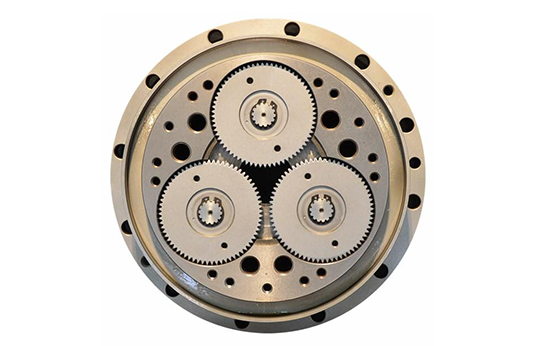
In the joints of humanoid robots, the commonly used reducers mainly include RV reducers, precision planetary reducers, and harmonic reducers. They each have unique structures, advantages and disadvantages, and application scenarios. Let's take a look at these "three brothers" of reducers together.
What are the things to choose
When selecting reducers for humanoid robot joints, multiple factors need to be considered comprehensively to ensure that the robot can achieve optimal performance.
Load capacity is one of the important factors to consider. Different robot joints will bear different sizes of loads during motion, so it is necessary to choose the appropriate reducer according to specific load requirements.
The precision of motion is also a key aspect to pay attention to when selecting. For humanoid robots that need to complete high-precision tasks, such as precision assembly and surgical assistance, the accuracy of the reducer is crucial.
Humanoid robots need to have flexible mobility, which requires their joint components to be as small and lightweight as possible. Therefore, when choosing a reducer, priority should be given to products with small size and light weight, in order to better integrate into the joints of the robot and reduce the impact on the overall motion performance of the robot.
In addition, cost is also one of the key factors affecting the selection of reducers. On the premise of meeting the performance requirements of robots, choosing a low-cost reducer can effectively reduce the manufacturing cost of robots and improve their market competitiveness.
Related News