
The difference between stepper motor and servo motor
Release Time:
2025-03-03
The stepper motor is an open-loop control system without an encoder, which means that after the command is given to the stepper motor (the driver sends a pulse), it will not provide feedback to the driver on how far and where the stepper motor has gone, making it easy to lose step. The control accuracy is relatively low, and it is generally improved by using reducers, damping technology, or increasing subdivision.
The difference between stepper motor and servo motor
servo motor
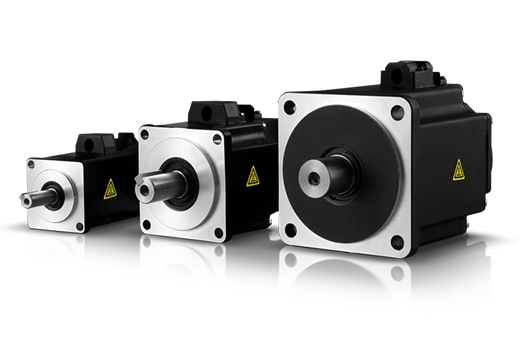
1. Control mode and accuracy
The stepper motor is an open-loop control system without an encoder, which means that after the command is given to the stepper motor (the driver sends a pulse), it will not provide feedback to the driver on how far and where the stepper motor has gone, making it easy to lose step. The control accuracy is relatively low, and it is generally improved by using reducers, damping technology, or increasing subdivision.
The servo motor is a closed-loop control system with an encoder. After the command is given to the servo motor, it will send real-time feedback data (the encoder monitors the rotor position of the motor in real time). The control accuracy can reach 0.001mm, which is very accurate and will not lose step.
stepping motor
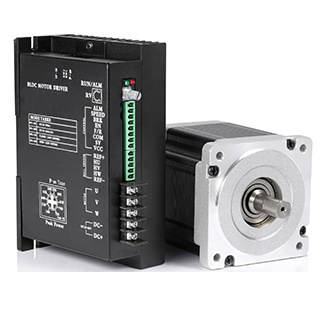
2. Operation and response
The acceleration time of the stepper motor is between 200-400ms, and there may be shaking during low-speed motion.
The acceleration time of servo motors is faster, reaching between 0.1ms-1ms, without low-frequency vibration phenomenon, and if it is an AC servo motor, it also has the characteristic of suppressing resonance.
3. Load capacity
Once a stepper motor is connected to a large load, it may experience step loss.
Servo motors do not experience this situation, as they have a 3-fold overload capacity.
4. Cost of use
The cost of a stepper motor is only one tenth of that of a servo motor.
Related News