
A Brief Discussion on Fault Analysis of Coal Mine Gear Reducer
Release Time:
2025-02-28
With the rapid development of industrial enterprises in China and the continuous progress of the reducer industry, gear reducers have become an indispensable part of coal mining machinery as a key equipment for crushing, coal mining machinery, and belt transportation in the coal mining industry. They undertake important tasks such as coal mining, crushing, and transportation, and have become an indispensable part of current coal mining machinery. Gear reducers generally play a role in low-speed and high torque transmission equipment, achieving the required reduction effect of the equipment by utilizing the speed of the electric motor and the transmission ratio of the gears. The following is an analysis of the faults in coal mine gear reducers and maintenance recommendations.
A Brief Discussion on Fault Analysis of Coal Mine Gear Reducer
With the rapid development of industrial enterprises in China and the continuous progress of the reducer industry, gear reducers have become an indispensable part of coal mining machinery as a key equipment for crushing, coal mining machinery, and belt transportation in the coal mining industry. They undertake important tasks such as coal mining, crushing, and transportation, and have become an indispensable part of current coal mining machinery. Gear reducers generally play a role in low-speed and high torque transmission equipment, achieving the required reduction effect of the equipment by utilizing the speed of the electric motor and the transmission ratio of the gears. The following is an analysis of the faults in coal mine gear reducers and maintenance recommendations.
1、 Common faults and causes of gear reducers
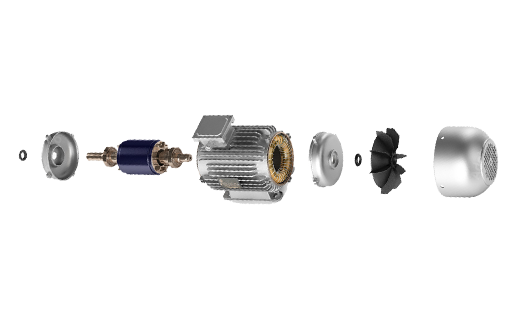
(1) Noise fault of gear reducer
1. Heating problem. There are two main situations regarding the issue of overheating. One is when the gearbox has a severe fever but there is no problem with the sound. Generally speaking, it is a problem with too much oil; If there is a sound of metal parts rubbing while having a fever, it can be basically determined to be an oil shortage problem; If there is a noticeable abnormal noise while the equipment is running during a fever, the sound becomes heavy and the corresponding load current also increases, it indicates that the equipment is overloaded and should be stopped immediately to check the cause and reduce the operating load of the machine. It should be noted that during the use of engine oil, attention should be paid to the height of the oil level, which should be kept within the specified range. In the absence of a dipstick, the oil level should be kept between one-third of the diameter of the large gear, and should not be too high or too low.
2. Tooth surface issues. Tooth surface problems are one of the common faults in gear reducers, mainly including tooth clearance wear, poor meshing between new and old gears, and tooth surface pitting corrosion. Gear clearance wear is often manifested as a knocking sound when the gear reducer is empty, but the sound decreases and there is no knocking noise under load. At this time, the gear with higher wear should be replaced or the worn gear should be turned over for use under tight time constraints; After the gear is just replaced, there are often problems such as loud and uneven noise, especially when using new and old gears together. This is because the tooth surfaces of the new and old gears have not fully contacted each other, and after a period of use, the machine's sound will return to normal; If there is uneven noise when foreign objects accidentally enter the gear reducer, the cause should be immediately checked and dealt with in a timely manner to avoid affecting the use of the machine; The latter is the problem of pitting corrosion on the tooth surface, which is mainly characterized by the loud "rumbling" sound emitted by the reducer during operation. At this time, the machine should be stopped immediately and it should be determined in a timely manner whether it is machine overload, high oil level, or severe wear on the tooth surface. Corresponding solutions should be made for different situations.
3. Vibration issues. During the use of gear reducers, vibration may occur due to two main reasons: loose or broken bolts, and severe wear of rolling bearings. For the former, it is necessary to promptly check the screws of each component, clarify the use of screws, and tighten or replace damaged screws; For vibrations caused by bearing wear and excessive clearance, each bearing can be inspected by opening the end cover, and repairs and replacements can be carried out based on the inspection results. In addition, there are also situations where the motor shaft rotates but the gearbox main shaft does not operate, usually due to gear breakage or broken rolling keys, causing the gears of the gearbox to lose meshing ability. The method of identifying the fault point is simple and feasible. Check where the original shaft is not running normally to identify the fault point, and then repair and replace it after finding the cause.
The fault analysis and maintenance of coal mine gear reducers are important measures to ensure their normal operation and extend their service life. By regularly replacing lubricating oil, cleaning, inspecting, strengthening lubrication, avoiding overload operation, and paying attention to installation and maintenance, the occurrence of faults can be effectively reduced and the performance of the gearbox can be improved.
Related News