
Working principle of three-phase asynchronous motor
Release Time:
2025-02-12
Three phase asynchronous motor is a common AC motor, which works based on the interaction between electromagnetic induction and rotating magnetic field. Here is its detailed working principle:
Three phase asynchronous motor is a common AC motor, which works based on the interaction between electromagnetic induction and rotating magnetic field. Here is its detailed working principle:
Basic working principle
When three-phase AC power enters the stator winding of a three-phase asynchronous motor, a rotating magnetic field is generated between the stator and rotor. This rotating magnetic field is formed by the composite magnetic field generated by the three-phase currents inside the stator winding. The rotating magnetic field cuts the rotor winding, and according to Faraday's law of electromagnetic induction, induced electromotive force is generated in the rotor winding, which in turn generates induced current. These current carrying rotor conductors are subjected to a force under the action of a rotating magnetic field, which causes the rotor to start rotating in the same direction as the rotating magnetic field.
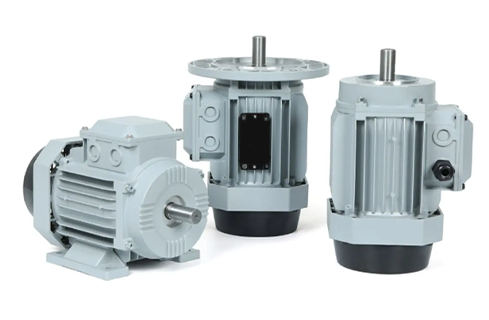
Formation of Rotating Magnetic Field
The stator winding of a three-phase asynchronous motor is distributed according to a certain pattern, usually with a difference of 120 degrees in electrical angle between each phase winding. When three-phase symmetrical AC power is applied to these windings, a rotating magnetic field is generated that rotates clockwise along the inner circular space of the stator and rotor at synchronous speed n1. This rotating magnetic field is the key to generating torque in three-phase asynchronous motors.
The concept of slip rate
The rotor and stator of a three-phase asynchronous motor rotate in the same direction, but do not reach the same speed. There is a speed difference between them, which is called slip. The existence of slip rate is the origin of the word "asynchronous" and the basis for electric motors to output mechanical power. If there is no slip rate, the rotor will not have relative motion and will not generate electromagnetic torque 1.
component
A three-phase asynchronous motor is mainly composed of the following parts:
Stator: including stator core and stator winding, it is the fixed part of the electric motor.
Rotor: including rotor core and rotor winding (cage or winding type), it is the rotating part of the electric motor.
Machine base: supports the stator and protects internal components.
End cover: protects the rotor and bearings
Related News