
What is a servo motor and what is the difference between it and a stepper motor?
Release Time:
2025-02-09
A servo motor refers to an engine that controls the operation of mechanical components in a servo system, and is an indirect transmission device that supplements the motor. Servo motors can control speed and have very accurate position accuracy.
A servo motor refers to an engine that controls the operation of mechanical components in a servo system, and is an indirect transmission device that supplements the motor. Servo motors can control speed and have very accurate position accuracy.
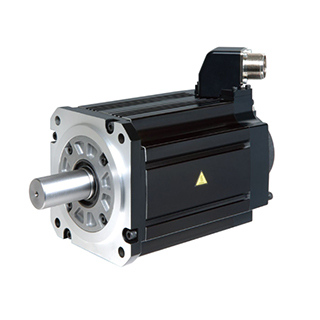
working principle:
A servo motor is mainly composed of a stator and a rotor. It receives signals from the controller, which contain command information such as the angle, speed, and torque of the motor rotation.
Taking an AC servo motor as an example, during operation, the stator winding generates a rotating magnetic field, which acts on the permanent magnet (for permanent magnet synchronous servo motors) or induced current (for induction servo motors) on the rotor, causing the rotor to rotate synchronously with the rotating magnetic field. Moreover, the motor is equipped with feedback devices such as encoders, which monitor the motor's angle, speed, and other status information in real time and provide feedback to the controller. The controller adjusts the input current or voltage of the motor based on the deviation between the feedback signal and the given command signal, thereby accurately controlling the operating state of the motor and achieving high-precision position, speed, and torque control.
Application areas:
Industrial automation: Used for conveying equipment and positioning devices in CNC machine tools, industrial robots, and automated production lines. On CNC machine tools, servo motors precisely control the motion trajectory of cutting tools, achieving precision machining of complex parts.
Aerospace: In the flight control system of an aircraft, servo motors are used to control the deflection angle of the control surface, ensuring the stability of the aircraft's flight attitude.
Intelligent equipment: such as automatic guided vehicles (AGVs) in intelligent warehousing, servo motors drive AGVs to accurately travel along set routes and complete material handling tasks.
Related News