
What are the parameters of a deceleration servo motor? How to select a servo deceleration motor
Release Time:
2025-01-17
The calculation of the output shaft torque of the reducer refers to the required torque calculated by the transmission mechanism. After confirming the torque required by your transmission mechanism, compare the torque of the servo motor you have selected. The ratio of these two torques is the reduction ratio of the reducer torque you want to choose. Of course, we usually make the final torque of the mechanism redundant, so the transmission ratio should be slightly larger.
A servo reduction motor is a device installed on a servo motor to reduce speed and increase torque. Its important parameters include reduction ratio, number of stages, full load efficiency, working life, rated torque, noise, etc. When selecting a servo reduction motor, it is necessary to consider comprehensively the calculation of output shaft torque, the calculation of maximum speed of the transmission mechanism, the selection of installation method of the transmission mechanism, the selection of transmission accuracy of the reducer, and the configuration of the reducer interface. Let's learn together how to choose a servo reduction motor.
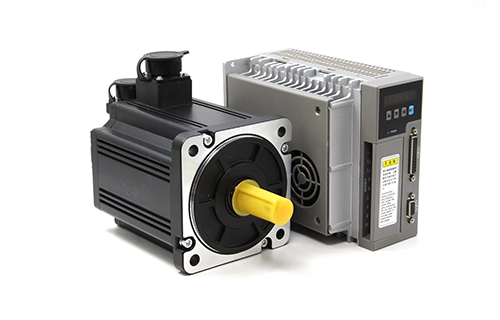
What is a servo reduction motor? A servo reduction motor, also known as a deceleration servo motor, generally refers to a servo motor reducer installed on a servo motor to reduce speed, increase torque, match inertia, and has the characteristics of high rigidity, high precision, high torque, and maintenance free.
2、 What are the parameters of the deceleration servo motor
Reduction ratio: the ratio of input speed to output speed.
Grade: The number of sets of planetary gears. Generally, the maximum level can reach three, but the efficiency may decrease.
Full load efficiency: The transmission efficiency of the gearbox under maximum load conditions (fault stop output torque).
Working life: The cumulative working time of the gearbox at rated input speed under rated load.
Rated torque: It is the torque allowed for long-term operation within the rated lifespan. When the output speed is 100 revolutions per minute, the lifespan of the gearbox is the average lifespan. If it exceeds this value, the average lifespan of the gearbox will decrease. When the output torque exceeds twice, the gearbox malfunctions.
Noise: Unit decibel dB (A), this value is measured at an input speed of 3000 revolutions per minute, without load, and at a distance of 1 meter from the gearbox.
3、 How to choose a servo reduction motor
In the selection process of servo motor reducers, the main attention should be paid to the selection and calculation of the following parameters:
The calculation of the output shaft torque of the reducer refers to the required torque calculated by the transmission mechanism. After confirming the torque required by your transmission mechanism, compare the torque of the servo motor you have selected. The ratio of these two torques is the reduction ratio of the reducer torque you want to choose. Of course, we usually make the final torque of the mechanism redundant, so the transmission ratio should be slightly larger.
Related News