
An article that makes you understand several ways of motor speed regulation!!
Release Time:
2025-01-16
In modern industry and daily life, the application of electric motors is ubiquitous. Realizing efficient and precise speed regulation of electric motors is crucial for improving production efficiency and equipment performance. Next, let's delve into several common ways of motor speed regulation together.
In modern industry and daily life, the application of electric motors is ubiquitous. Realizing efficient and precise speed regulation of electric motors is crucial for improving production efficiency and equipment performance. Next, let's delve into several common ways of motor speed regulation together.
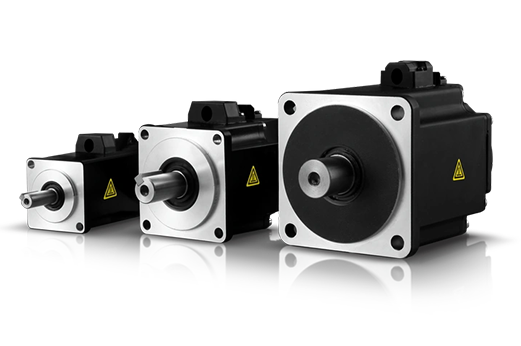
Variable pole speed regulation
Variable pole speed regulation is a method of speed regulation achieved by changing the number of pole pairs in the stator winding of an electric motor. It has the advantages of relatively simple operation and low cost. In practical applications, by switching different stator winding connection methods, the number of magnetic poles can be changed to achieve the goal of changing the motor speed. This speed regulation method is usually suitable for situations that do not require frequent speed regulation and do not require high speed regulation accuracy, such as some fans, water pumps, and other equipment.
However, variable polarity speed regulation also has certain limitations. Due to the discrete nature of the change in pole pairs, the smoothness of speed regulation is poor, making it difficult to achieve continuous and smooth speed regulation. Moreover, when changing the number of pole pairs, it is necessary to shut down the motor, which may not be applicable in some scenarios that require high continuity of production. But for applications that require relatively low speed regulation performance, focus on cost and ease of operation, variable pole speed regulation is still a feasible choice.
frequency control
Variable frequency speed regulation is currently one of the most widely used methods for motor speed regulation. It adjusts the speed of the motor by changing the frequency of the power supply, achieving smooth and precise speed regulation. The variable frequency speed regulation system usually consists of a frequency converter, an electric motor, and a control unit. The frequency converter converts a fixed frequency power supply into an adjustable frequency power supply, thereby changing the speed of the motor.
This speed regulation method has many advantages. Firstly, the speed range is wide, allowing for continuous adjustment from extremely low speeds to high speeds. Secondly, the speed regulation accuracy is high, which can meet various high-precision control requirements. In addition, variable frequency speed regulation can effectively save energy, improve the operating efficiency of electric motors, and reduce the operating costs of equipment. However, at the same time, the cost of variable frequency speed regulation system is relatively high, and the requirements for technology and maintenance are also strict.
Cascade speed regulation
Cascade speed regulation is a method of speed regulation achieved by introducing additional electromotive force into the rotor circuit of a wound asynchronous motor. It utilizes the slip power to improve the efficiency of the speed control system. In a cascade speed control system, the speed of the motor is adjusted by changing the magnitude and phase of the additional electromotive force.
Cascade speed regulation has high efficiency and a wide speed range, suitable for regulating large capacity, medium to high speed electric motors. However, the structure of the cascade speed regulation system is relatively complex, the control difficulty is high, and it requires a high level of technical expertise and maintenance costs. In addition, due to the presence of power electronic devices, it may cause certain harmonic pollution to the power grid.
Related News