
Gearmotor Industry: Selected Manufacturer List, Product Introduction, and Industry Depth Analysis
Release Time:
2025-01-13
A deceleration motor is a mechanical device that integrates a motor and a deceleration device, used to reduce the speed of the motor and increase the output torque. It can convert high-speed rotating motors into low-speed high torque outputs, suitable for situations that require precise control of speed or torque.
What is a 'deceleration motor'
A deceleration motor is a mechanical device that integrates a motor and a deceleration device, used to reduce the speed of the motor and increase the output torque. It can convert high-speed rotating motors into low-speed high torque outputs, suitable for situations that require precise control of speed or torque.
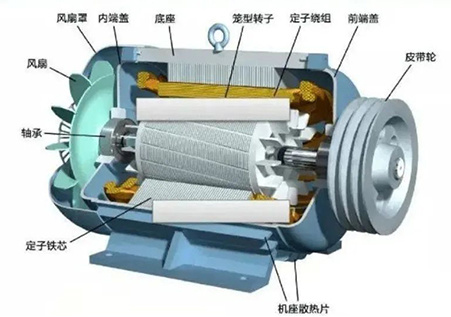
Application scope of "reduction motor"
1. Industrial automation: In automated production lines, reduction motors are commonly used to drive various mechanical equipment, such as conveyor belts, robot joints, automation tools, etc.
2. Robotics technology: In robots, deceleration motors are widely used in joint areas to provide precise control and sufficient torque, enabling robots to complete various complex actions.
3. Precision instruments: In precision instruments, reduction motors are used to drive precision transmission mechanisms, such as optical instruments, measuring instruments, etc., to achieve precise motion control.
4. Medical equipment: In medical equipment, reduction motors are used to drive the moving parts of various medical devices, such as surgical instruments, rehabilitation equipment, etc.
5. Transportation: In the field of transportation, deceleration motors are used to drive auxiliary systems of vehicles, ships, and aircraft, such as landing gear, braking systems, etc.
6. Aerospace: In the aerospace field, deceleration motors are used to drive various mechanical components of aircraft, such as control surfaces, flaps, etc., to achieve precise control and stable flight.
history
Gearmotors originated in the industrial era at the end of the 19th century and were initially used in textile machinery and early industrial production lines. With the advancement of technology, the design and performance of deceleration motors are constantly improving and gradually being applied in various mechanical equipment. In the mid-20th century, with the development of electronic technology, motor control technology began to rise, and the combination of reduction motors and electric motors became closer, forming a more efficient transmission system. Entering the 21st century, with the development of automation and intelligent technology, the application fields of deceleration motors have further expanded and become an indispensable part of modern mechanical equipment.
present situation
At present, reduction motors are widely used in various fields such as manufacturing, automation equipment, robotics, aerospace, transportation, etc. With the increasing awareness of environmental protection, energy-saving, efficient, and low-noise reduction motors have become the mainstream in the market. At the same time, with the development of technologies such as the Internet of Things, big data, and artificial intelligence, intelligent deceleration motors have begun to emerge and can achieve functions such as remote monitoring and fault warning. In addition, in order to meet the needs of different application scenarios, the degree of customization of reduction motors is increasing, developing from a single transmission function to a multifunctional and integrated direction.
Related News