
The relationship between micro motors and reducers
Release Time:
2024-09-12
In addition, the integration of micro motors and reducers also involves multiple aspects such as bearing selection and gearbox design to ensure efficient and reliable operation of the motors and reducers. For example, the selection of bearings should be determined based on the characteristics of the axle load in the application. Ball bearings are suitable for applications with high radial and axial axle loads, while ceramic bearings are suitable for cost sensitive applications that require extended service life.
Micro motors and reducers are interdependent, and micro motors achieve the functions of reducing speed and increasing torque through reducers.
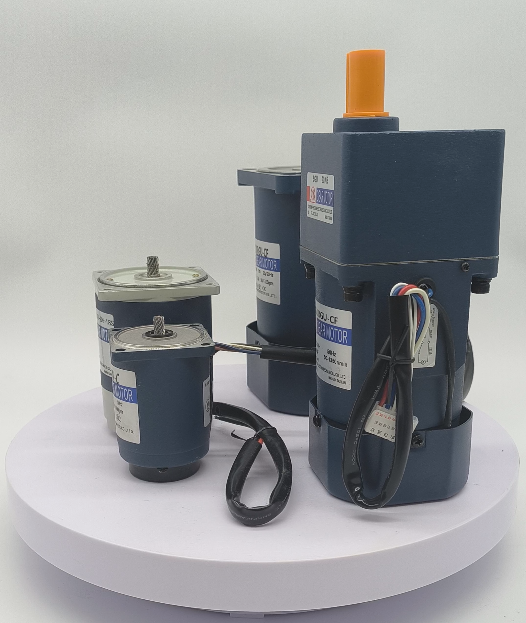
Micro motors usually have high rotational speed and low torque, while reducers reduce the rotational speed of micro motors through gear transmission or worm gear transmission, while increasing the output torque to meet the needs of specific application scenarios. This combination is called a micro reduction motor, which integrates the functions of a reducer and a motor, allowing the motor to operate under low speed and high torque conditions.
The function of a reducer is to control the speed of the motor through the speed conversion of gears, achieving the purpose of deceleration. The speed ratio of a reducer, which is the ratio of input speed to output speed, is an important parameter for measuring the deceleration effect of a reducer. The larger the speed ratio, the lower the output speed of the motor, but the greater the output torque. Therefore, for applications that require low-speed and high torque output, such as automated mechanical equipment, micro reduction motors are widely used due to their unique deceleration and force enhancement functions.
In addition, the integration of micro motors and reducers also involves multiple aspects such as bearing selection and gearbox design to ensure efficient and reliable operation of the motors and reducers. For example, the selection of bearings should be determined based on the characteristics of the axle load in the application. Ball bearings are suitable for applications with high radial and axial axle loads, while ceramic bearings are suitable for cost sensitive applications that require extended service life.
Related News