
Exploring Motors: From Structure to Working Principle
Release Time:
2025-01-07
A motor is a device that converts electrical energy into mechanical energy, typically by rotating a mechanical load through a rotating shaft. According to its structure and working principle, motors can be divided into DC motors and AC motors.
A motor is a device that converts electrical energy into mechanical energy, typically by rotating a mechanical load through a rotating shaft. According to its structure and working principle, motors can be divided into DC motors and AC motors.
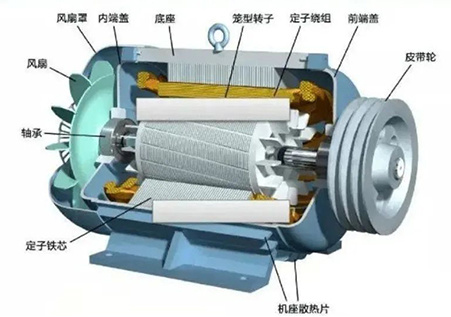
DC motor is the most common type, which consists of three parts: stator, rotor, and brush. The stator is composed of an iron core and coils, while the rotor is made of permanent magnets or electromagnets, and current is transmitted between the two through electric brushes. DC motors can achieve forward and reverse rotation and speed regulation functions, but due to the contact friction between their brushes and rotors, they can generate electric sparks and mechanical wear, resulting in a shorter lifespan.
AC motors are different in that they rotate the rotor through a rotating magnetic field generated by a three-phase AC power source. Its structure is divided into two types: fixed rotor and asynchronous rotor. The fixed rotor generates a rotating magnetic field through current and magnetic field inside, while the rotor is driven to rotate. AC motors have a long lifespan and high efficiency, but they cannot regulate speed.
Working principle of motor
A motor rotates mechanical loads through electromagnetic induction and other physical effects. Here are two common principles:
1. Principle of Electromagnetic Induction
The principle of electromagnetic induction is to generate torque through the interaction of current and magnetic field, thereby driving the rotor to rotate. When powered on, a magnetic field is generated inside the stator coil, which attracts the rotor, which becomes a magnetic pole, to the stator. When the current is reversed, the magnetic field is also reversed, and the rotor is repelled to the other end, thus achieving rotation.
2. Hall effect principle
The Hall effect is a method of detecting and measuring magnetic fields through the movement of electrons in semiconductor materials. In the motor, Hall elements are installed on the rotor, and when they rotate through the rotating shaft, the Hall effect can be used to detect the position and direction of the rotor, thereby achieving control and speed regulation of the motor.
Application of motors
As a universal power equipment, motors are widely used in modern industry. It is commonly used to drive mechanical loads, including conveyors, water pumps, fans, robots, etc. Motors are also used in the manufacturing of electric vehicles, power tools, household appliances, and other products.
Overall, motors play a crucial role in modern industry as devices that convert electrical energy into mechanical energy. Through the preliminary introduction in this article, we can better understand the structure and working principle of the motor, as well as its role in the application field of fans.
Related News