
Working principle of deceleration motor
Release Time:
2025-01-05
The working principle of the deceleration motor, a seemingly ordinary yet magical mechanical device, is truly fascinating. It can not only help us solve the problem of mismatched speed and torque, but also play an important role in reducing noise and improving efficiency.
Have you ever been troubled by the speed of rotation not being able to meet the demands of your work? Do you feel annoyed by the roaring sound of the motor rotating? Then you must not miss this mysterious little thing - the deceleration motor!
The working principle of the deceleration motor, a seemingly ordinary yet magical mechanical device, is truly fascinating. It can not only help us solve the problem of mismatched speed and torque, but also play an important role in reducing noise and improving efficiency.
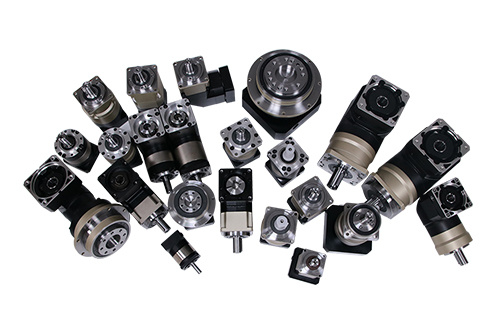
1、 Working principle of deceleration motor
A deceleration motor, as the name suggests, is a device that can reduce the speed of an electric motor. It mainly achieves this function through the internal gear transmission mechanism.
Specifically, when the electric motor starts, its high-speed rotational power is transmitted to the internal gear set through the input shaft of the reduction motor. These gears are carefully designed and proportioned to significantly reduce the speed of the output shaft while increasing the torque accordingly.
The gear transmission mechanism of a reduction motor is its core component, usually composed of multiple gears of different sizes that mesh with each other. The gear ratio of these gears determines the output speed and torque of the reduction motor. When the high-speed rotation of the electric motor is transmitted through the gear set, due to the larger gear having more teeth than the smaller gear, the speed of the output shaft will correspondingly slow down, while the torque will increase due to the leverage effect of the gear.
2、 The magic of deceleration motors
Speed regulation: The deceleration motor can adjust the speed of the motor as needed to adapt to different working requirements. Whether it requires high-speed operation or low-speed high torque output, the deceleration motor can easily handle it.
Increasing torque: Through deceleration, the deceleration motor can significantly increase the torque of the output shaft, enabling it to drive heavier loads or perform more complex tasks.
Reduce noise: The reduction motor reduces the noise generated by the high-speed rotation of the motor through its internal gear transmission mechanism, making the equipment run more smoothly and quietly.
Improving efficiency: High quality reduction motors focus on precision and durability in the design and manufacturing process, which can reduce energy loss and wear, and improve the overall efficiency and service life of the equipment.
Related News