
Why does the right angle reducer not turn after being powered on?
Release Time:
2024-12-30
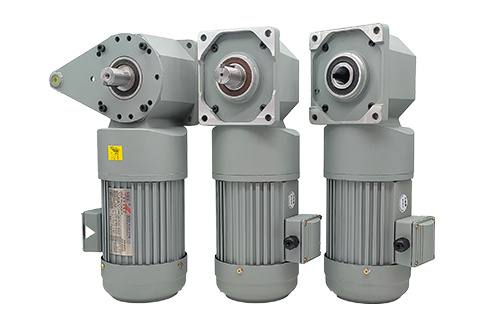
In industrial production, right angle reducers play a crucial role. However, sometimes we encounter situations where the right angle reducer does not turn after being powered on, which undoubtedly brings difficulties to production. Don't worry, let's analyze the reasons comprehensively below.
In industrial production, right angle reducers play a crucial role. However, sometimes we encounter situations where the right angle reducer does not turn after being powered on, which undoubtedly brings difficulties to production. Don't worry, let's analyze the reasons comprehensively below.
Power and wiring issues
On the one hand, power failures cannot be ignored. If the power supply is abnormal, such as insufficient voltage or power outage, the right angle reducer will naturally not be able to operate with power.
At this point, a voltmeter can be used to measure the power supply voltage to ensure that it meets the working requirements of the gearbox. At the same time, poor or loose contact of the power plug can also cause problems. It is necessary to check whether the connection between the plug and the socket is firm. If there is a problem, the plug can be unplugged or the socket can be replaced.
Line faults may also be the culprit. Check whether the power cord of the reducer is damaged, short circuited, or open circuited. Use a multimeter to conduct a continuity test on the power cord. Once a circuit fault is found, replace the power cord in a timely manner. In addition, if there are problems with switches, relays, contactors and other components in the control circuit, it will also affect the normal operation of the gearbox.
Motor issues
A short circuit or open circuit in the motor winding will prevent the motor from operating normally. A multimeter can be used to measure the resistance value of the motor winding and determine whether there is a short circuit or open circuit. If the motor winding is damaged, the motor needs to be replaced.
Damaged motor bearings can cause difficulty or inability to rotate the motor. Check for any abnormal noise, overheating, or other issues with the motor bearings. If there are any problems, replace the bearings promptly.
Severe wear of carbon brushes inside the motor can also affect its normal operation. Check the length and wear of the carbon brush, and replace it if necessary.
If the load borne by the reducer exceeds the rated load capacity of the motor, the motor may stop rotating due to overload. Check the load condition of the gearbox for any jamming, blockage, or other issues, and eliminate the cause of overload.
Long term continuous operation of the motor may also cause overheating and overload. At this time, the motor should be allowed to rest appropriately and restarted after cooling down.
Related News