
Structure of gearbox
Release Time:
2024-12-16
The various gearbox structures introduced above have their own advantages and applicable scenarios. By understanding the working principles and structures of different types of reducers, it is possible to better meet the requirements of machines and equipment for output torque and speed in practical applications.
Common gear reducer
Common gear reducers are very common in the mechanical drive process of customers in factories. It uses two gears installed on two similar shafts to complete the tasks of transmitting power and reducing speed. This reducer has a lever, cam, and some ball bearings.
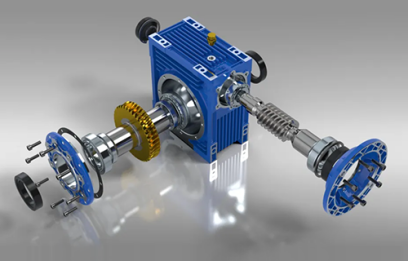
Common gear reducers can provide various reduction ratios, thereby providing appropriate rotational speeds for different machines, vehicles, and equipment. They are easy to maintain and have a long service life.
Planetary gearbox
Planetary gearbox is a type of gearbox structure commonly used to meet the demands of high torque and low-speed output. It consists of a circular gear (sun gear) and several gears (planet gears) that rotate around it. In this system, the input shaft rotates the sun gear, and the planetary gears slide between the sun gear and the fixed support, thereby changing the speed and torque of the output shaft.
For applications that require high torque and low-speed output, planetary gearboxes are a very suitable solution. It has high durability and reliability.
Bevel gear reducer
Cone gear reducers typically use right angle transmission to achieve high torque requirements. It consists of two axes intersecting at right angles. Install a driving gear on one of the shafts to rotate one of the two bevel gears. The other side of each bevel gear meshes with the output shaft to achieve the task of rotating the output shaft. The bevel gear reducer has very high reliability and durability, and works under very high loads.
Spiral bevel gear reducer
Spiral bevel gear reducer is a complex reducer structure consisting of bevel gears, spiral gears, matching shafts, and couplings. If you need to output greater torque in high load and low-speed environments, then this type of gearbox will be a good choice. In addition, due to its complex structure, spiral bevel gear reducers usually have higher costs.
The various gearbox structures introduced above have their own advantages and applicable scenarios. By understanding the working principles and structures of different types of reducers, it is possible to better meet the requirements of machines and equipment for output torque and speed in practical applications.
Related News